







Patient satisfaction is a critical marker in evaluating the overall success of a case in dentistry. The key in most cases is to find the most conservative approach to achieving the final result. This often means using a multidisciplinary approach when dealing with cases that present with challenging circumstances.
Understanding the patient’s needs, and discussing what is achievable and any risks are the key to ensuring the patient is well-informed and ultimately satisfied.
Case Study
Dr. LaJean Morrow-Smith of Premier Dental in Greensboro, North Carolina asked Burbank Dental Lab to help restore this case and help this patient achieve his desired results.
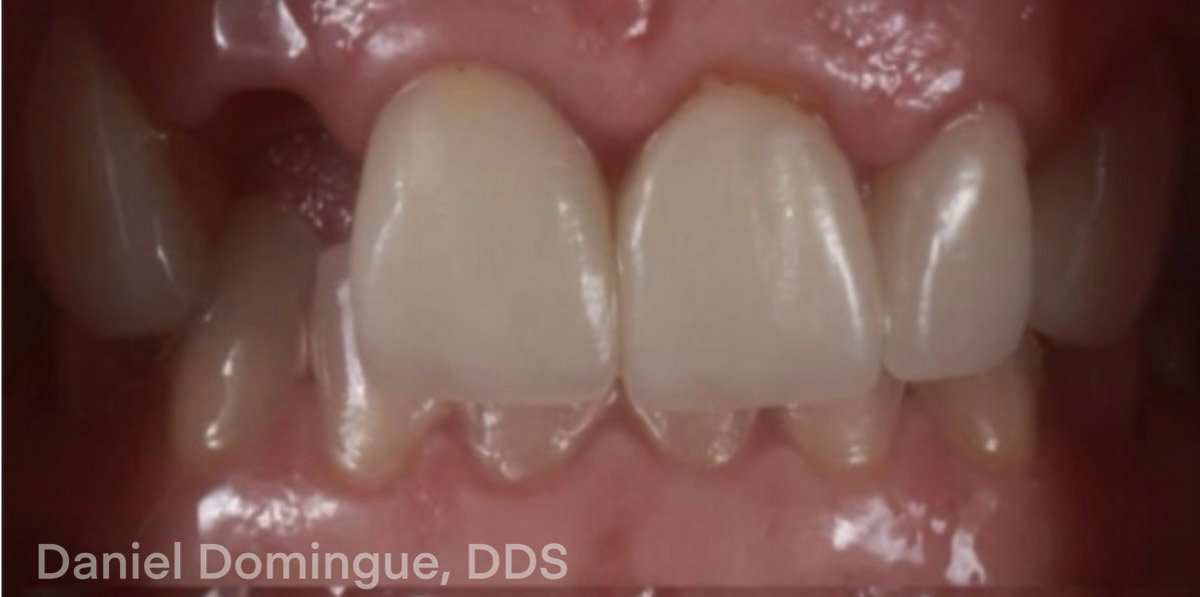
This patient presented to Dr. Morrow-Smith with an ankylosed central (tooth #8). Tooth #7 was lingually positioned, and the tissue levels were uneven. The patient wanted to correct the mismatched tooth levels, bring #7 more in line with the other teeth, and lighten and brighten up his overall smile.
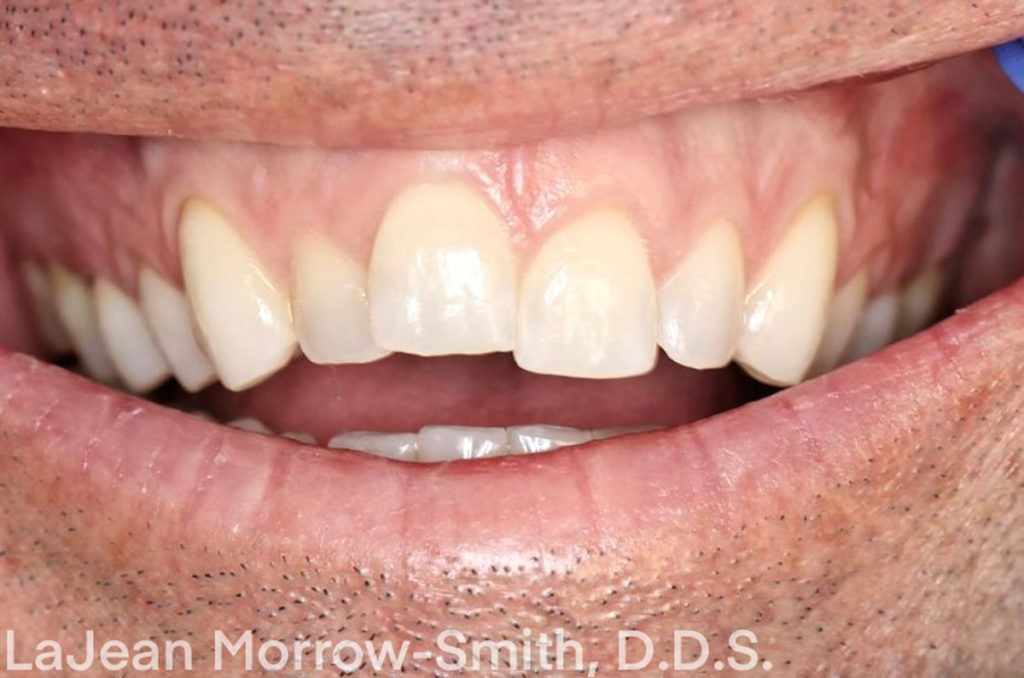
This case was evaluated with a multidisciplinary approach to improve the patient’s esthetics in terms of symmetry and color, as well as correct asymmetric gingival margins. The patient had already attempted to fix the situation with Invisalign to bring down #8 as much as possible and move #7 to a more facial position. The Invisalign was not effective, and the patient sought out other treatment options.

Ankylosed Tooth
The first issue was to address the central (tooth #8). Because this tooth lost its ligament and fused to bone (ankylosis), it was difficult to remedy with Invisalign.
These are the common causes of ankylosis in adults:
When considering the ideal smile and providing improved esthetics for patients, symmetry and balance are keys to achieving case success. This case definitely presented with challenges to achieving this. While the key was to provide a more ideal smile line, the focus was also to provide the patient with an improved profile.
The following are some treatment options when dealing with an adult ankylosed tooth:

In this case, the patient had tried to use Invisalign to bring down tooth #8 and also bring #7 to a more facial position. This treatment plan was unsuccessful, and a new treatment plan was provided.
When treatment planning, it is important to evaluate the gingival contours to ensure an optimal final esthetic result. Dr. Morrow-Smith decided to crown lengthen both tooth #9 and tooth #10 to expose more of the tooth structure and make the gingival height in the esthetic zone more even.
Crown lengthening is done for these reasons:
This patient needed have more tooth structure exposed. This would provide a more even gum line to address the patient’s esthetic concerns. The idea was to reestablish the gum area on tooth #9 and tooth #10 more apically as much as possible without violating the biological width. While not perfect, due to biological width limitations, a huge improvement was made.
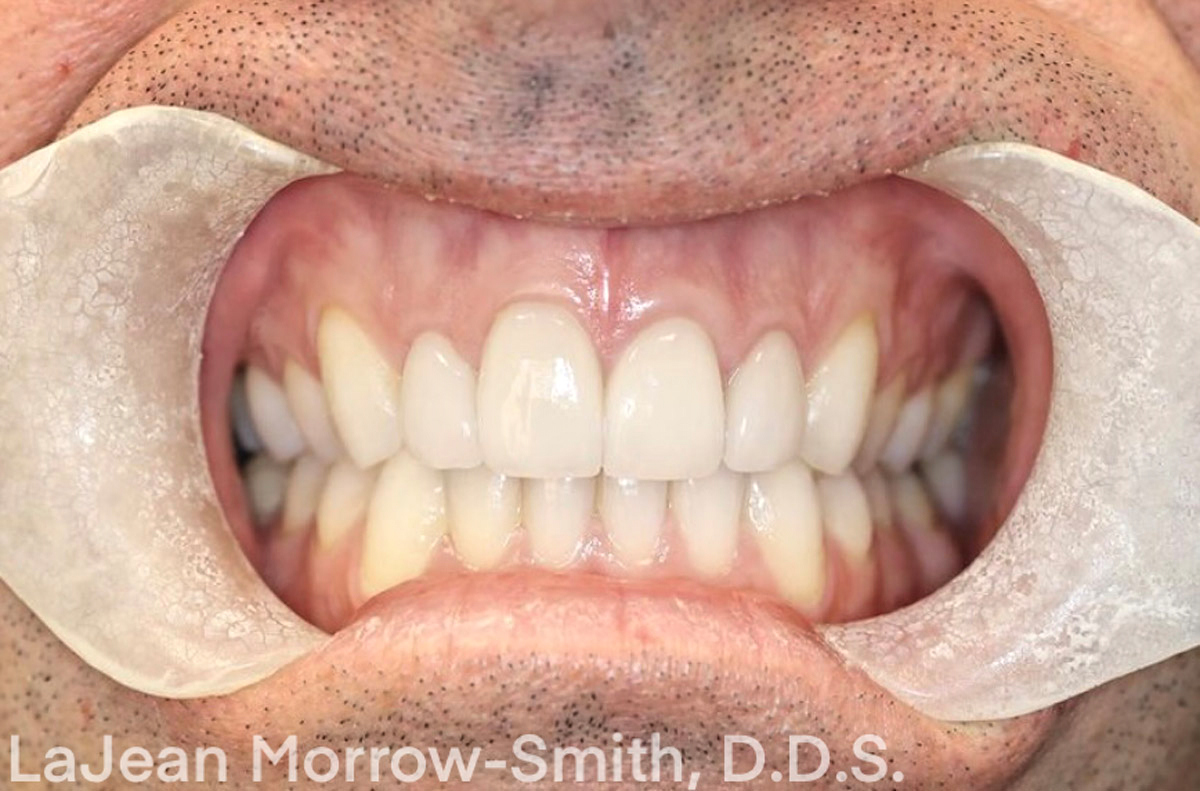
The final phase of the treatment plan was to complete four veneers on teeth #7-10. This would help to bring tooth 7 out facially, create a more even smile line and then brighten the patient’s smile. The case was prepared for veneers on teeth #7-10 and sent to Burbank Dental Lab to complete 4 e.max veneers for teeth #7-10.
E.max Veneers
E.max, a lithium disilicate, was the material chosen to restore this case. Lithium disilicate offers a natural translucent effect that helps it to blend in beautifully with natural dentition. This material has a lower refractive index and excellent optical properties. There are several opacity and translucency options to choose from. This allows a solution for a wide range of clinical challenges.
The ingot selection is as follows:
There are some other options with the e.max press line, like their multi ingots and opal ingots that have some very specific uses. The key is to provide Burbank Dental Lab with specific information about the shade.
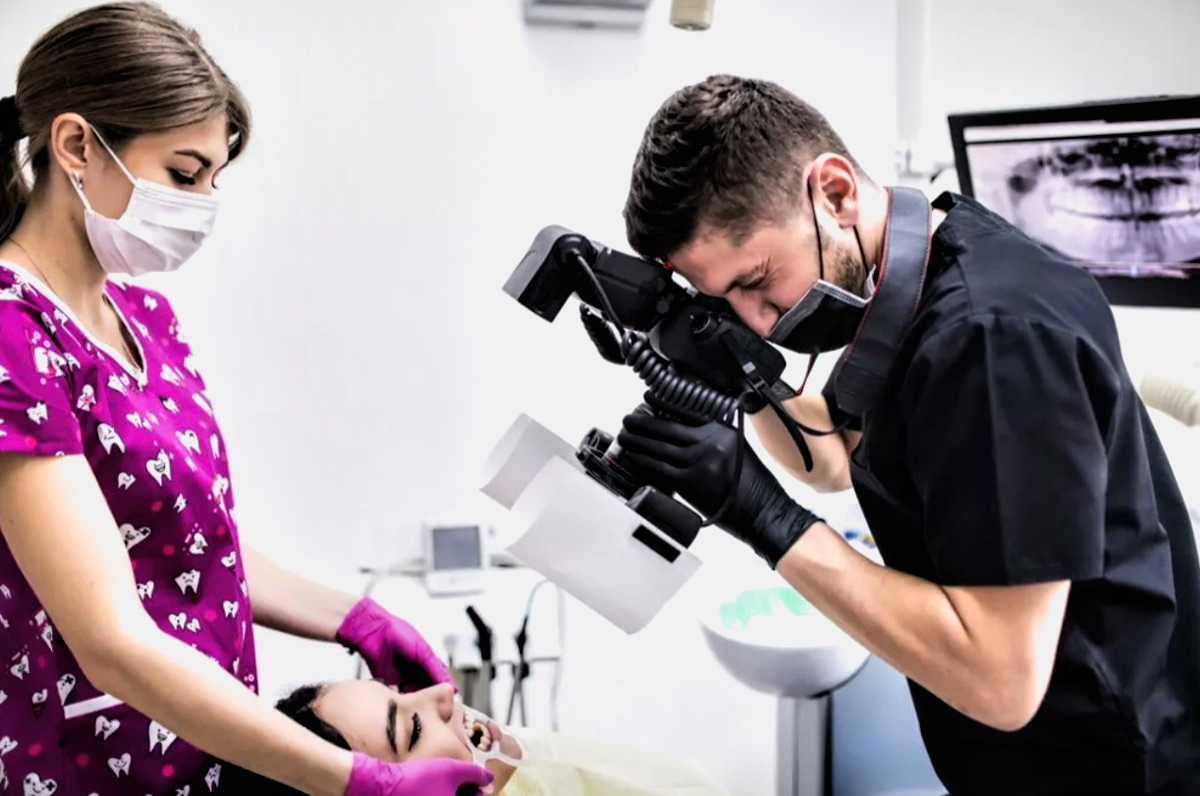
Specifically, provide the following:
From this information, a member of the Smiles by Design team at Burbank Dental Lab will be able to select the appropriate e.max ingot to provide a natural match for the given case.
Dr. Morrow-Smith provided the necessary information as well as communicated that she wished the case to be completed a shade lighter because the patient wanted to bleach his teeth lighter.
This case was then tried in to evaluate the fit, color, and shape.
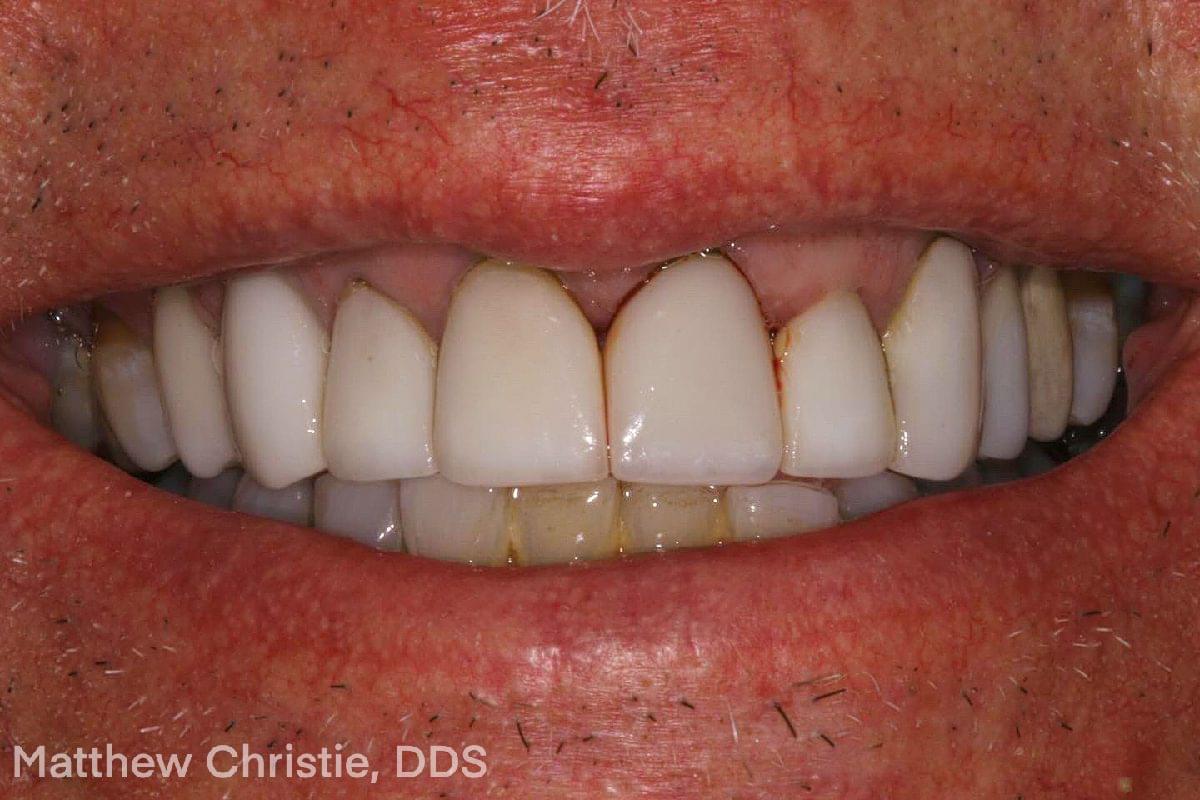
The patient approved the restorations. The case was inserted for a very nice aesthetic improvement.
BEFORE
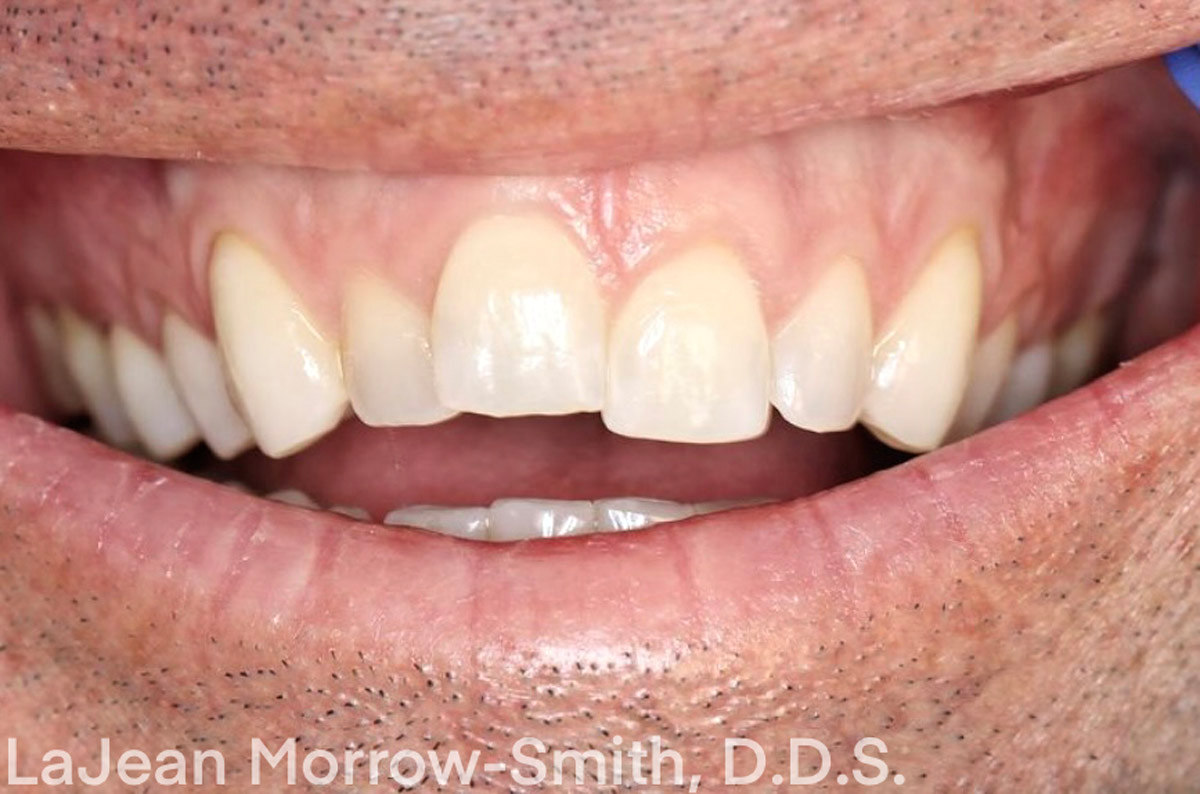
AFTER
This case was completed using a multidisciplinary approach to improve the esthetics for a patient with an ankylosed tooth, uneven smile line, and asymmetric gingival margins. The case was completed using crown lengthening and restorative dentistry. The patient opted for future dental bleaching to brighten up the rest of the teeth.
The patient was very happy with the results.
The key to a successful case is one in which the patient’s needs are met while ensuring functional requirements are met as well.
Call or chat with a Burbank Dental Lab team member today to discuss your next case.
Need to discuss a case?
Thank you Dr. LaJean Morrow-Smith
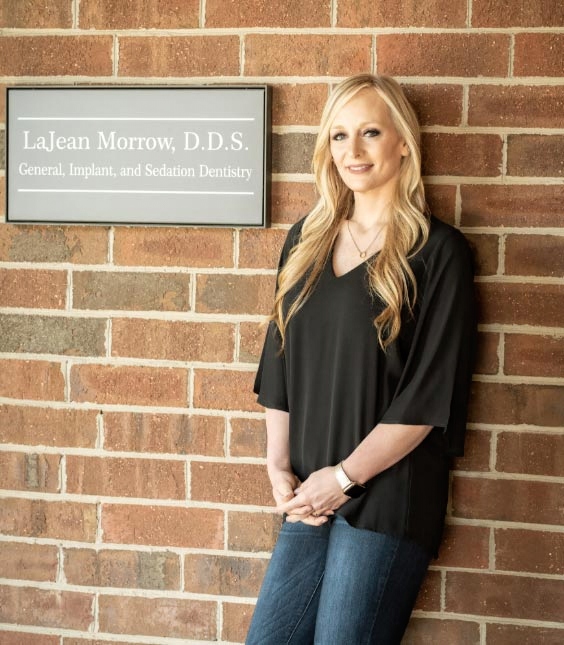

We want to thank Dr. LaJean Morrow-Smith for choosing Burbank Dental Lab to work with on this case.


 Previous Post: