



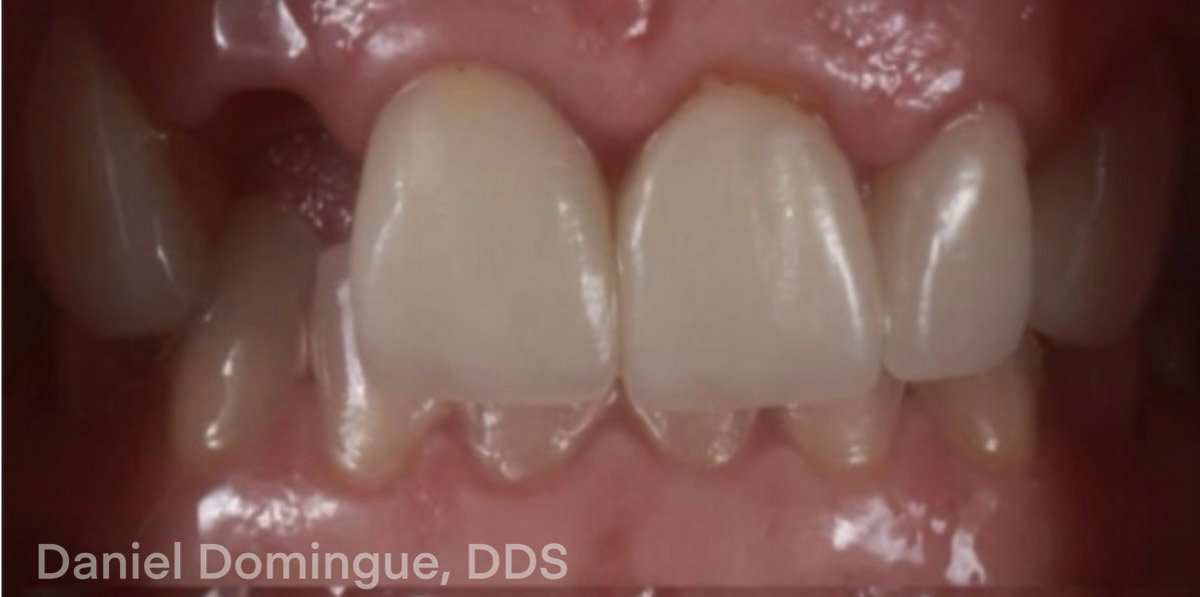

If a patient has broken three prostheses in a row, the problem isn’t bad luck. It’s a material mismatch, and replacing the same type of restoration a fourth time isn’t a treatment plan; it’s a pattern.
“Three broken prostheses later, the real diagnosis isn’t the patient—it’s the plan.”
At Burbank Dental Lab, we see this more than most. Patients arrive with a history of failed zirconia hybrids, fractured metal-reinforced restorations, and clinicians are understandably searching for a better path forward. In the majority of these cases, the answer isn’t a stronger material. It’s a smarter one.

This article outlines the clinical rationale for choosing a PMMA hybrid over a titanium framework for patients with recurrent prosthetic failure. including the specific failure patterns to look for, how to decide between materials, a step-by-step look at our digital workflow, and what current clinical research says about long-term outcomes.

REQUEST THE BURBANK DENTAL LAB FEE SCHEDULE
REQUEST FEE SCHEDULE
The Real Problem with Repeated Prosthetic Failure
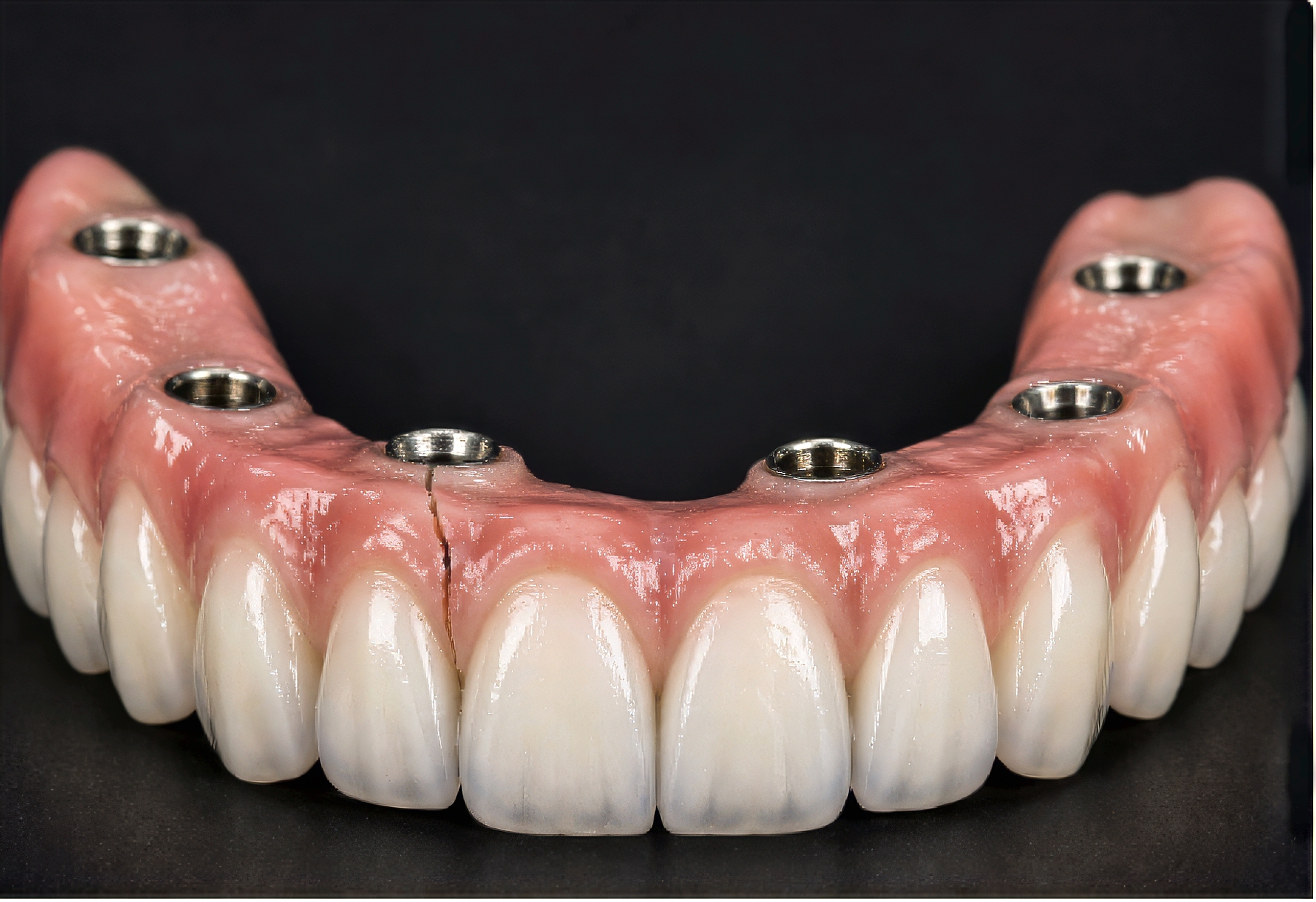
When a full-arch prosthesis fractures once, it’s a complication. When it fractures two or three times, across different material types, it’s a signal that the clinician and lab need to stop remaking the same decision and start asking different questions. The most common failure patterns we see from referring clinicians are:
Understanding where the fracture occurred tells you more about why the restoration failed than the patient’s history ever will. A posterior base fracture and a midline fracture have entirely different etiologies, and the clinical response should be different for each.
FREE TO DOWNLOAD – SUCCESS GUIDES
DOWNLOAD A GUIDE
PMMA Hybrid vs. Zirconia: How Do You Choose the Right Material?
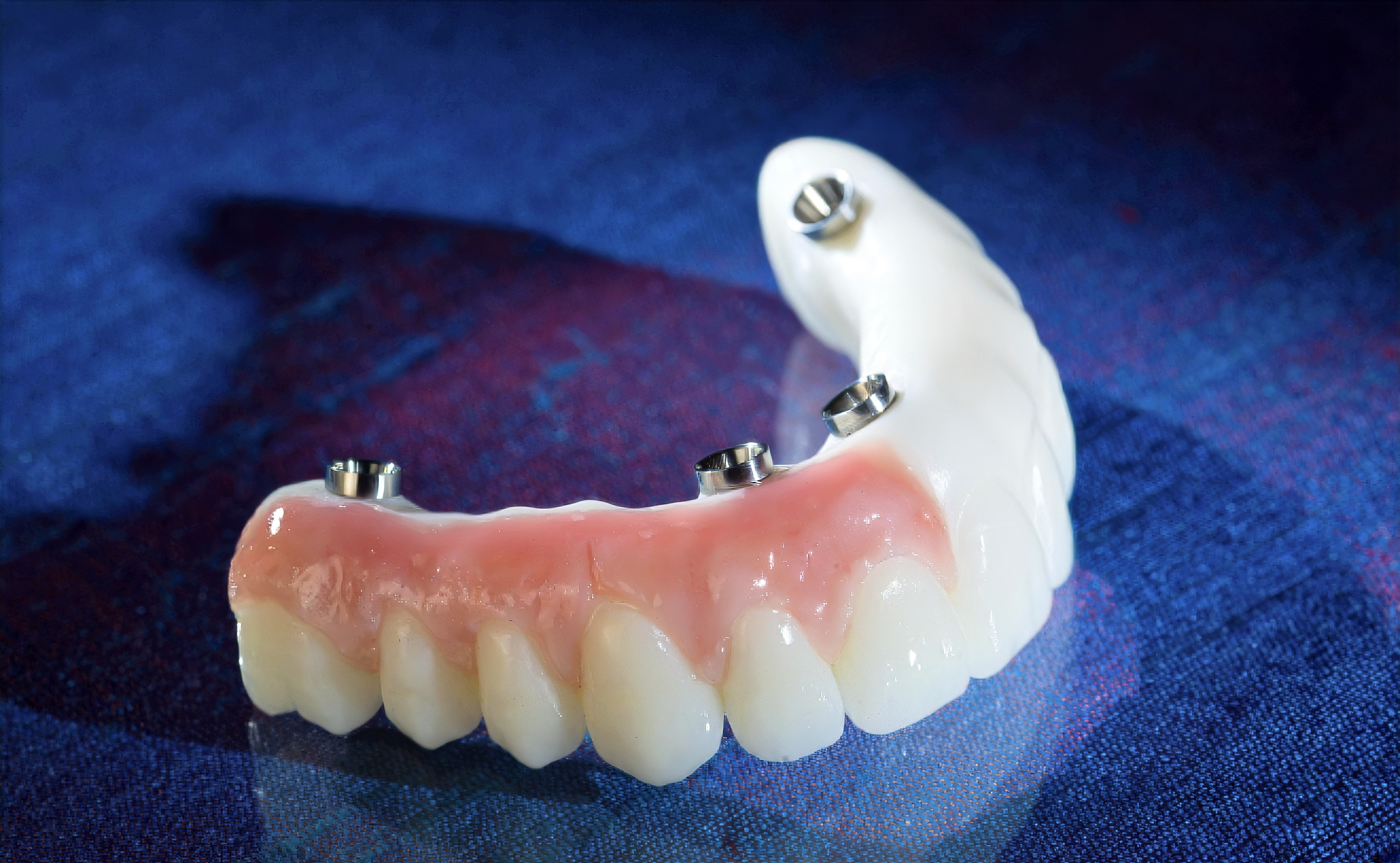
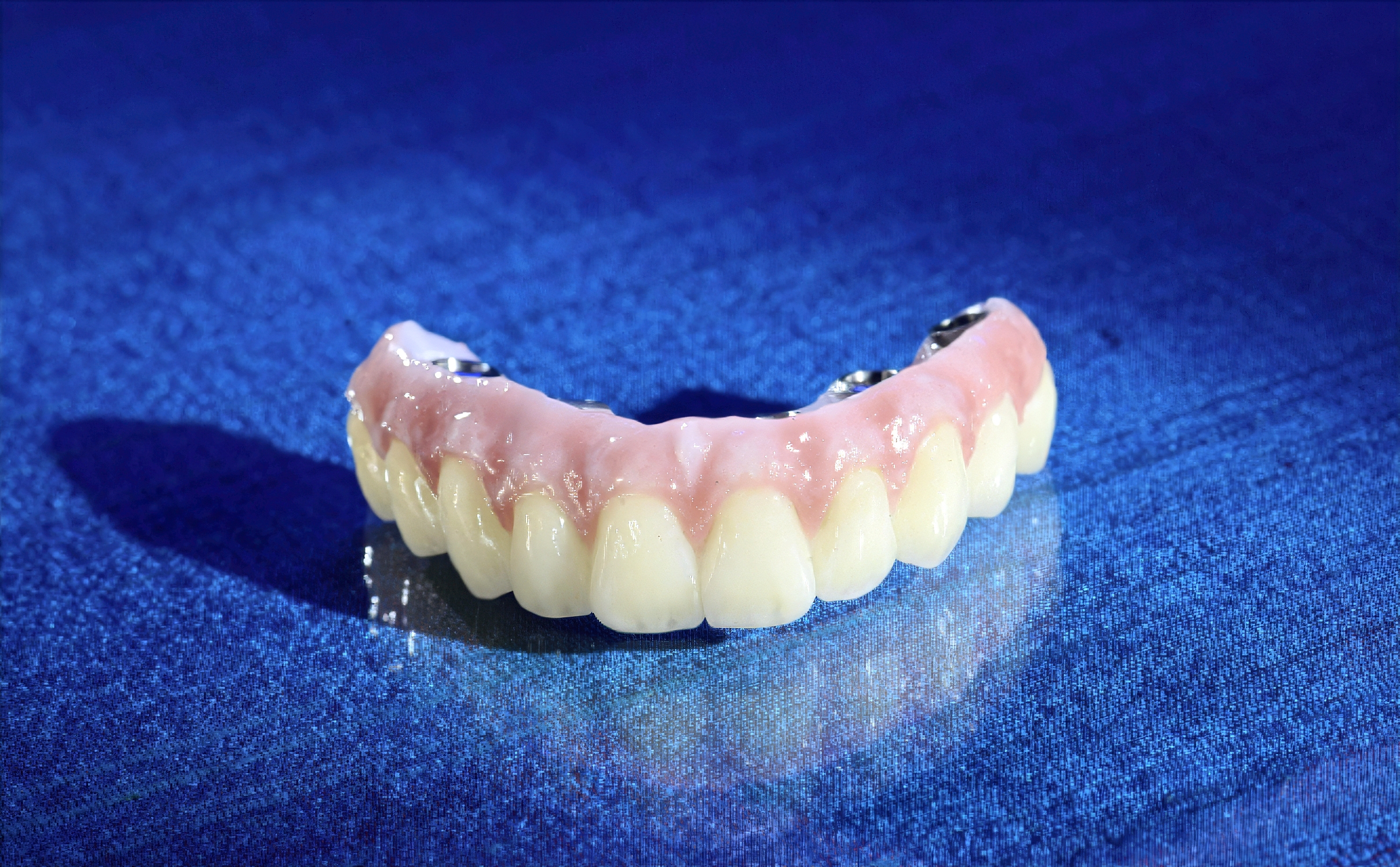
This is the question every clinician should answer before the first impression is taken, not after the second failure. Here is how we look at it:
Clinical Factor | PMMA Hybrid ( Ti Framework) | Zirconia Hybrid |
History of prosthetic fracture | First choice | Evaluate carefully |
Bruxism or parafunctional habits | Preferred | High facture risk |
Immediate loading protocol | Well-supported | Possible with limitations |
Long-term wear resistance | Moderate - plan for maintenance | Superior |
Esthetic longevity priority | Good | Better |
Repairability chairside | Excellent | Poor to none |
Cost and access considerations | More accessible | Higher cost |
The key insight here is that zirconia’s strength is also its liability. Its rigidity concentrates stress at the prosthesis-abutment interface. In patients with elevated occlusal forces, the interface eventually loses. PMMA’s slight flex is not a weakness; it’s a load management feature.
Strength that won’t bend is strength that eventually breaks something else.
What Current Research Tells Us About PMMA for Full-Arch Restorations
The clinical literature on CAD/CAM milled PMMA has grown considerably, and the findings are consistent with what we see in practice. A few things are now well established:
PMMA is viable as a definitive material, not just a provisional. When supported by a titanium framework, milled PMMA functions well as a long-term restoration rather than just a placeholder before a “real” prosthesis. Published case follow-ups have documented stable function with no mechanical, biomechanical, or biologic complications over multi-year observation periods.
The data keeps saying what the chairside repairs already proved.
Patient quality of life improves dramatically and quickly. Across studies measuring oral health-related quality of life, patients treated with implant-supported PMMA full-arch restorations consistently report significant improvements in daily function, comfort, and confidence, even when minor prosthetic events occur.
Risk factors for failure are patient-related, not purely material-related. The complications most associated with full-arch PMMA restorations, marginal bone loss and base fractures, are consistently linked to factors like smoking, parafunctional habits, maxillary placement, and cantilever design, rather than the PMMA material itself. This reinforces that proper patient selection and thoughtful occlusal design matter more than material swaps alone.
The clinical takeaway: PMMA without a substructure is appropriate for provisional and transitional use. For patients with high functional demands and a history of failure, pairing milled PMMA with a precision-milled titanium bar is the approach that most consistently delivers long-term maintainability.
Case Study: When Zirconia, Metal, and Conventional Dentures All Failed
When every material has already failed once, the answer isn’t a fourth guess—it’s a different question.
The following case was submitted to Burbank Dental Lab through a restorative access program.
Patient presentation:
What the pattern told us: Three different material types had failed. This ruled out a single-material deficiency and pointed to an occlusal loading profile exceeding the structural capacity of any unsupported overlay, including zirconia. The problem was not the materials. The problem was that none of the previous solutions accounted for this patient’s functional demands.
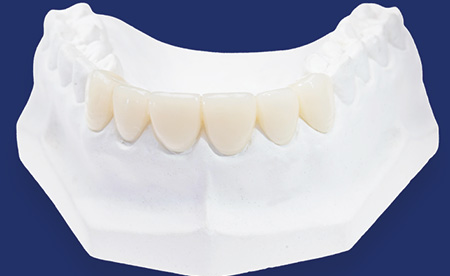
Treatment decision: PMMA hybrid over a precision-milled titanium bar (Smart1 system, Burbank Dental Lab).
The rationale was not that PMMA is stronger than zirconia, because it isn’t. The rationale was that PMMA on a rigid titanium substructure provides controlled flex, reducing catastrophic stress concentration at the prosthesis-abutment interface. More importantly, if the PMMA overlay is ever damaged, it can be repaired or replaced without remaking the entire prosthesis. For a patient with this history, that repairability is not a nice-to-have. It is the clinical strategy.
Our Digital Workflow: Step-by-Step
Precision isn’t a single step—it’s every step agreeing with the last one.
Predictability in complex cases like this one comes from precision at every stage of fabrication. Here is how Burbank Dental Lab executes this workflow.
Step 1: Full Digital Capture
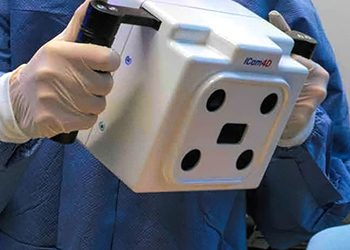
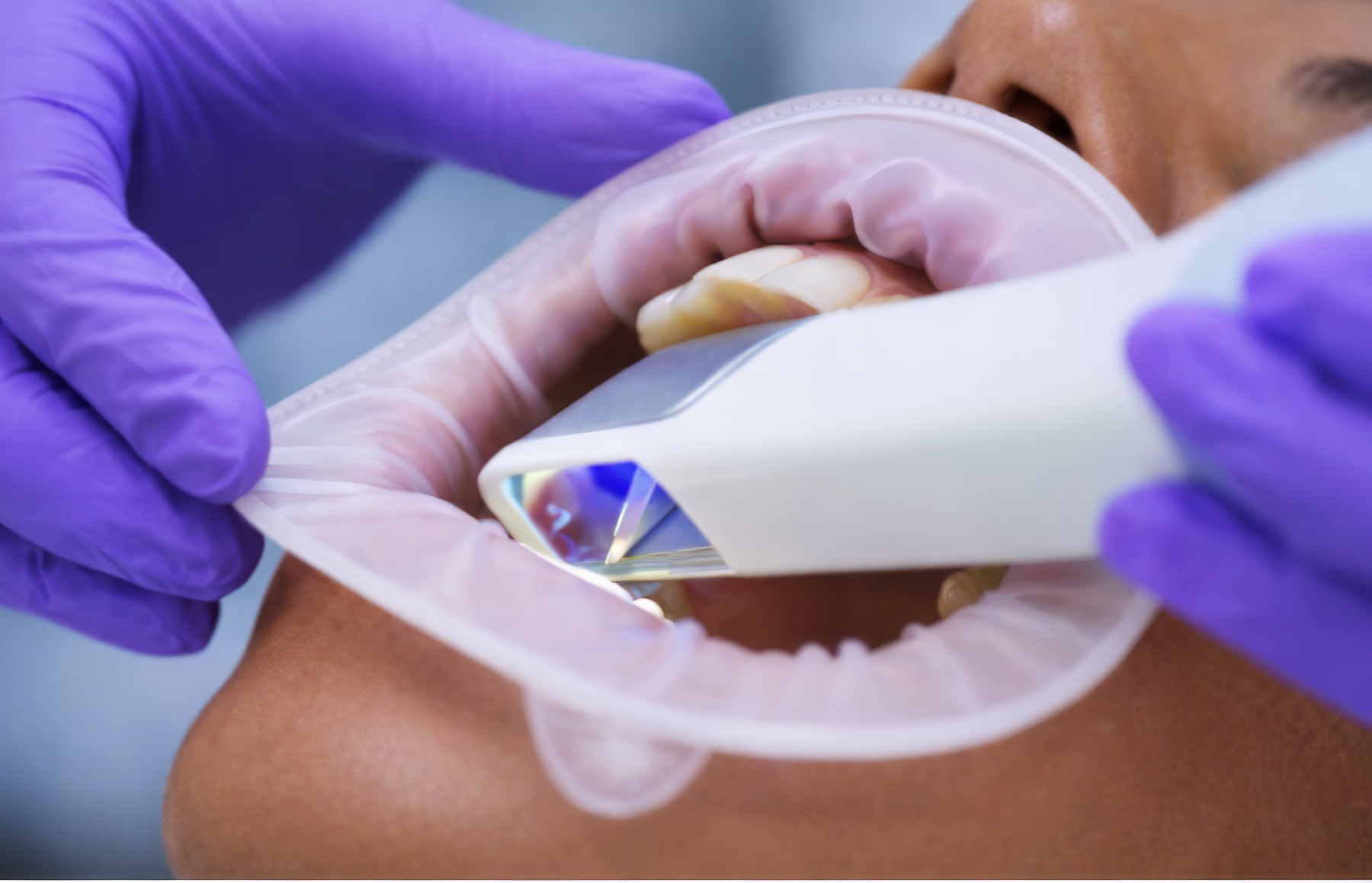
Both arches are scanned to record implant positions via scan bodies, soft tissue contours, and the existing occlusal relationship. If the patient has a prosthesis that established a functional bite, even one that fractured, that data is captured and used. The patient’s existing vertical dimension is not estimated; it is digitally preserved.
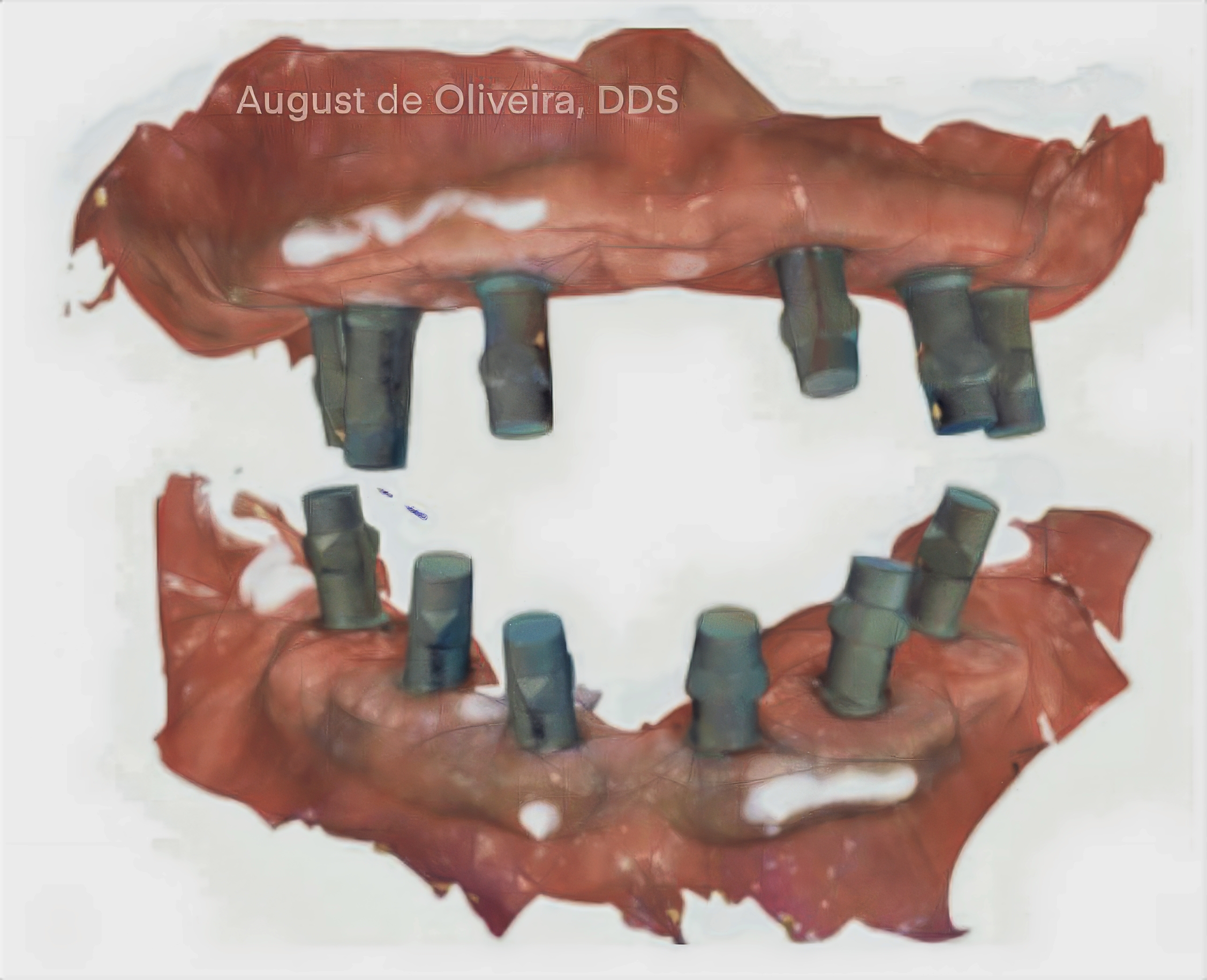
Step 2: Virtual Design and Occulsal Evaluation
The case is designed in CAD software and evaluated in a virtual articulator environment. Occlusal contacts are verified for evenness across the arch. Cantilever extensions, which are a primary driver of posterior base fractures, are minimized or eliminated wherever the implant configuration allows, and any remaining cantilever is kept out of excursive contact.
Our baseline occlusal setup is deliberately shallow: a flat plane of occlusion with 10-degree (shallow-cusp) teeth, broad and even centric stops, and no interferences. Because implants lack the periodontal ligament that cushions natural teeth, flattening the scheme and stripping out steep guidance keeps peak lateral forces off the individual implant-prosthesis interfaces, which matters most in the parafunctional patients this approach is built for.
From that baseline, the excursive scheme is dictated by the opposing arch, not by preference:
Confirming what sits in the opposing arch before the design is finalized isn’t a formality; it changes the prescription.
Step 3: Prototype Verification
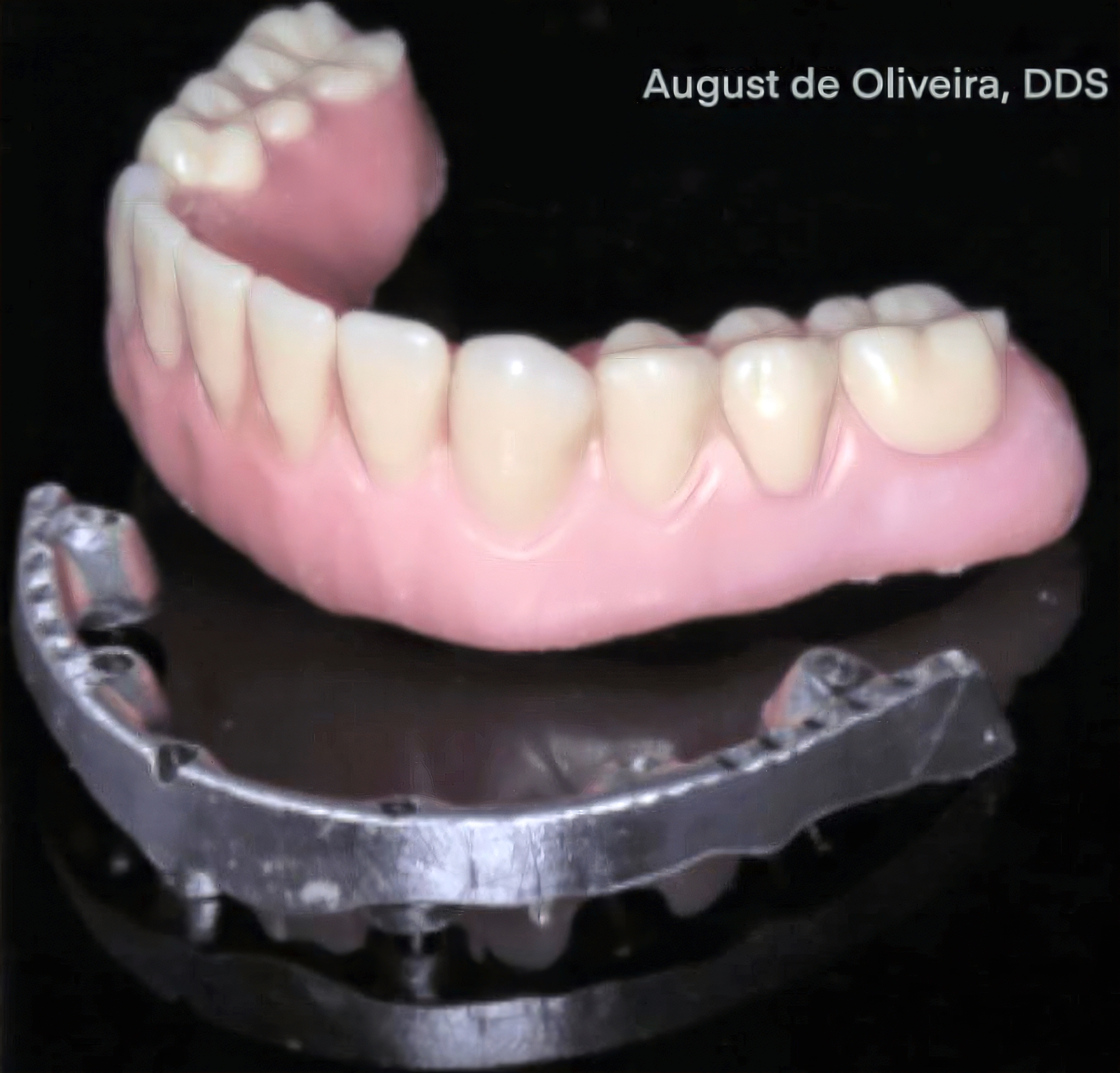
A milled PMMA prototype is fabricated before the final restoration. This is not optional for complex cases. The prototype verifies midline, vertical dimension, phonetics, esthetic approval, and occlusal relationships in the mouth, not just on a model. Any necessary adjustments are made at this stage, not after final delivery.
Step 4: Final Verification
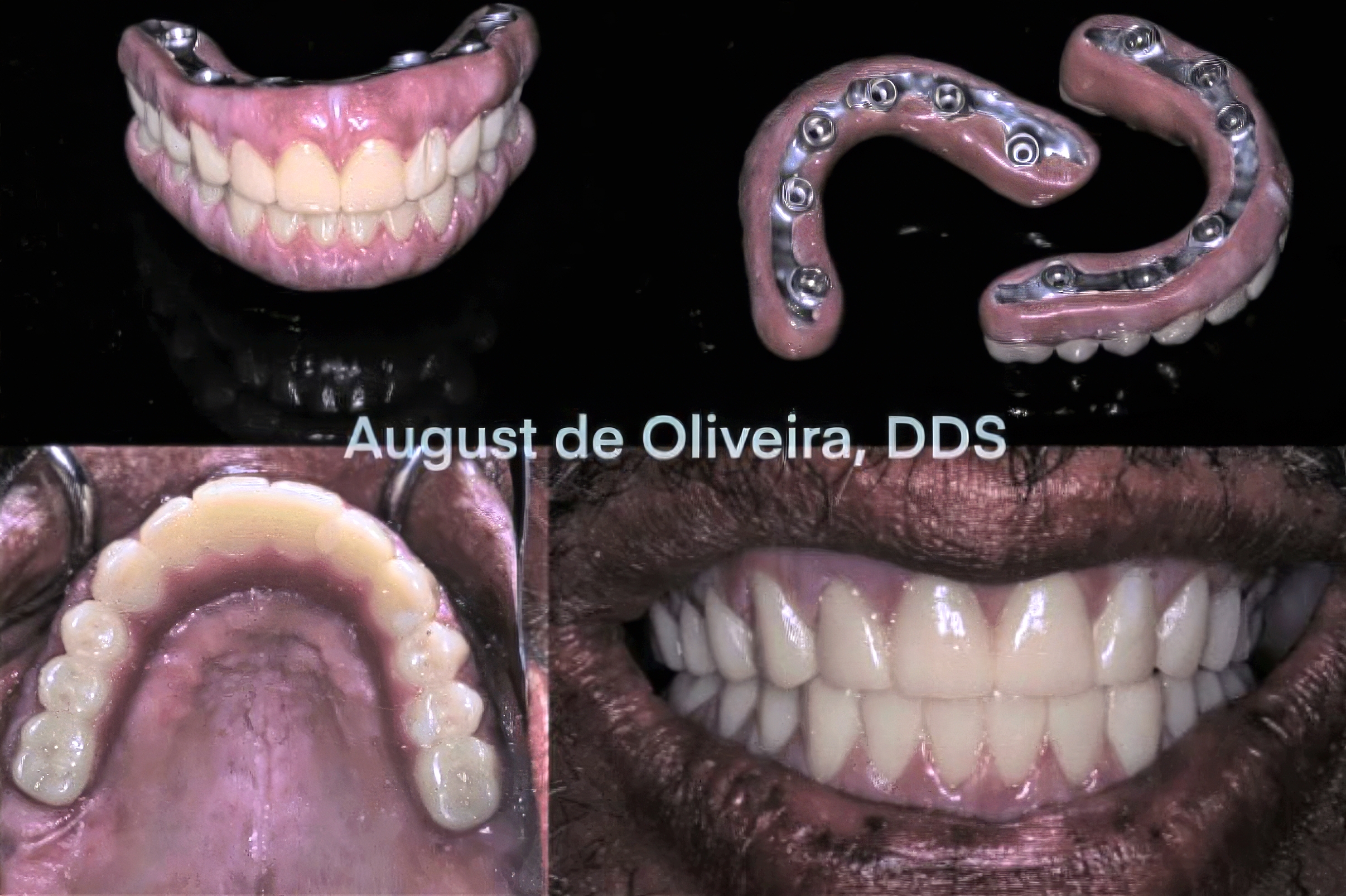
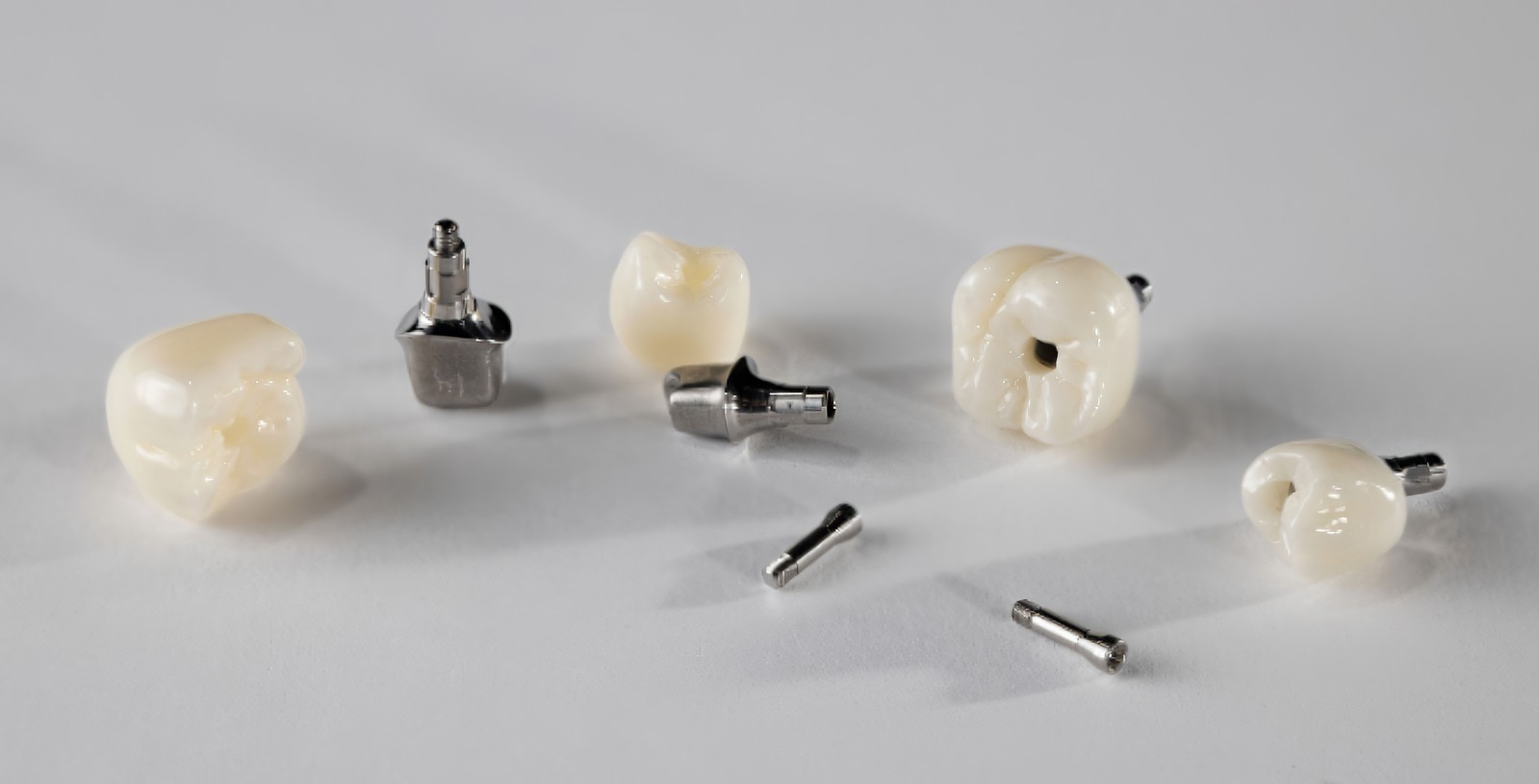
The titanium bar (SMART 1) is milled to provide a passive fit across all implant connections. The PMMA overlay is milled from a dense, high-impact material, characterized to simulate natural gingival tissue and dentition, and bonded to the framework with the design extended to the gingival level for proper contour and hygiene access.
Repair Protocol: What Happens When PMMA Needs Servicing?
A prosthesis that can be fixed in an afternoon was never really broken.
This is the section most articles skip entirely. Reparability is the central clinical argument for PMMA, but only if the repair process is efficient. Here is how it actually works:
A useful way to frame the material: treat it the way you would a traditional denture. Adjusting and polishing use the same instruments and technique, and because milled PMMA and conventional denture acrylic are virtually the same material, servicing expectations should track what you would expect from a denture, periodic maintenance on a predictable interval, not evidence that something has failed.
Chairside tooth fractures: Most single-tooth fractures can be repaired at the chair using light-cured composite resin bonded to the PMMA surface after micro-etching. Surface preparation with a PMMA primer significantly improves bond strength. This is typically a straightforward appointment, not an emergency remake.
Multiple-tooth fractures or overlay damage: Not every repair happens at the chair. When the PMMA overlay is compromised beyond a chairside fix, the prosthesis returns to the lab for a full rework — but the patient isn’t left without teeth while that happens. As long as the titanium bar is unmodified, their previous prototype PMMA can be placed back into service as an interim restoration, keeping them in function and closing the one-to-two-week gap the lab needs to remill a fresh PMMA, de-bond and clean the bar from the compromised prosthesis, and bond the new PMMA back onto it.
Full overlay replacement: In long-term use cases, full overlay replacement extends the functional life of the prosthesis while preserving the titanium framework investment entirely. This is routine maintenance planning and should not be seen as a failure.
Zirconia, by contrast, cannot be repaired chairside. A fractured zirconia hybrid means a new prosthesis. For patients with high occlusal risk, it is an ongoing financial and clinical liability that compounds over time.
When to Choose a PMMA Hybrid: Clinical Decision Criteria
The right material reveals itself once you stop asking which one is strongest.
Based on our case experience at Burbank Dental Lab, a PMMA hybrid over a titanium framework is the right call when any of the following apply:
Consider zirconia or an alternative material when:
The Role of the Titanium Framework: Why Passive Fit Is Everything
An overlay draws attention, but the bar underneath decides whether the implants survive.
The PMMA overlay gets most of the attention in these conversations, but the titanium bar determines whether the prosthesis protects the implants long-term.
At Burbank Dental Lab, our SMART 1 titanium bars are precision-milled to achieve a passive fit across all implant connections. Passive fit means the bar seats without any internal tension — no rocking, no gaps, no component torque. A framework that fits under tension may appear to seat correctly at delivery, but it is loading the implant-bone interface every time the patient bites. Over months and years, that manifests as marginal bone loss and, in worst cases, implant failure.
Precision milling tolerances matter here in a way that cannot be compensated for by occlusal adjustment or patient management. Every SMART 1 bar is evaluated on a verification model before it leaves our dental lab.
The Bottom Line
Failure isn’t a verdict on the patient—it’s an invitation to redesign the solution.
A history of prosthetic failure is not a patient compliance problem. It is a material selection problem, and it is solvable.
The PMMA hybrid over a titanium framework works for high-risk full-arch patients because it aligns the prosthesis design with the patient’s actual functional reality. It distributes forces instead of resisting them until fracture. It can be repaired instead of replaced. And it protects the implant investment that neither clinician nor patient wants to repeat.
At Burbank Dental Lab, we have been working through complex implant cases for over 50 years. When a case arrives with a history of failure, we do not approach it as a remake. We approach it as a diagnostic opportunity, and a PMMA hybrid is frequently the right answer.
If you have a complex full-arch case with a history of prosthetic failure, we want to talk through it with you. Our technicians work directly with clinicians to select the right material, design the right framework, and build a restoration that holds up in the real world.
The best questions clinicians ask are the ones they used to skip
FAQ


 Previous Post: