






Patients continue to become more and more knowledgeable about the treatment options available to them. As dental consumers, patients have a heightened awareness of esthetics, and thanks to the internet, they can research available treatment modalities.
This awareness has created the need for dental offices to offer comprehensive products, services, and treatments to ensure optimal patient care. One area that can provide considerable benefits to the overall patient experience is orthodontic treatments.
Orthodontics can help provide beautiful esthetic results in the smile zone and help to treat more complicated cases that may require correcting the occlusion.
While patients desire straight teeth, the idea of having to wear conventional metal braces to achieve those results often hinders case acceptance. Finding ways to help patients accept optimal treatment plans is often the precursor to innovative new products and techniques.
Helping patients accept treatments that are more conservative and, overall, offer excellent oral health and ideal outcomes are what helped drive the development and implementation of removable clear aligners.
Orthodontic Tooth Movement
Orthodontic tooth movement (OTM) using clear aligners is achieved through the fabrication of different aligners. These appliances are fabricated incrementally with a typical aligner being changed every three to four weeks. Each aligner offers a slight change that helps to move teeth to a desired spot within the arch.
Conventional Method
The conventional method used in OTM with clear aligners includes polyvinyl siloxane (PVS) impression material for the upper or lower arch or both. Also, a PVS bite should be taken along with x-rays.
Photos are needed both extraorally as well as intraorally.
This information is sent to Burbank Dental Lab, where models are produced, showing the patients' current situation.
The desired result is analyzed against the starting point, and a plan is developed, revealing any necessary reduction, intrusions, and/or extrusions. It is at this point where the number of aligners needed to achieve the desired results is determined.
Digital Method

Another method that can be used to fabricate clear aligners is to use an intraoral scanner to produce digital impressions (See image shown above).
This method provides many benefits, including precision, faster turn-around times, and improved patient experience.
Digital workflows in orthodontic planning provide an overall improved process. There are a few different approaches that a clinician can take to provide these appliances.

One method is through the use of the Blue Sky Plan software (see above image). This software can be used to receive the data from an intraoral scan and begin to plan treatment.
The steps for this method are as follows:
- Use an intraoral scanner to scan both arches.
- Import the files into the Blue Sky software.
- Utilize the software to identify tooth position
- Define the teeth border and tissue utilizing the Blue Sky software. This can be done by clicking and dragging each data point, or the margin can be drawn by dragging the select tool over each tooth individually.
- Teeth are now ready to be moved.
- Digitally, the teeth can be moved in the following ways:
- Alignment can be achieved to an ideal arch.
- One tooth can be moved within the arch.
- The teeth can be tipped with the pivot fulcrum set at the height of the gingiva. - Once the teeth are in the desired alignment, the case can be evaluated to determine the duration of the aligner steps. The steps can be weekly, bi-weekly, or monthly. Once this is determined, the software will calculate the input data and reverse engineer the movement process based on the clinicians' parameters.
- Composite buttons are then placed strategically on teeth to efficiently create the desired movement.
- Finally, each model receives an identifying label that consists of a patient name and step number. Then the data is exported to a 3D printer for model output.
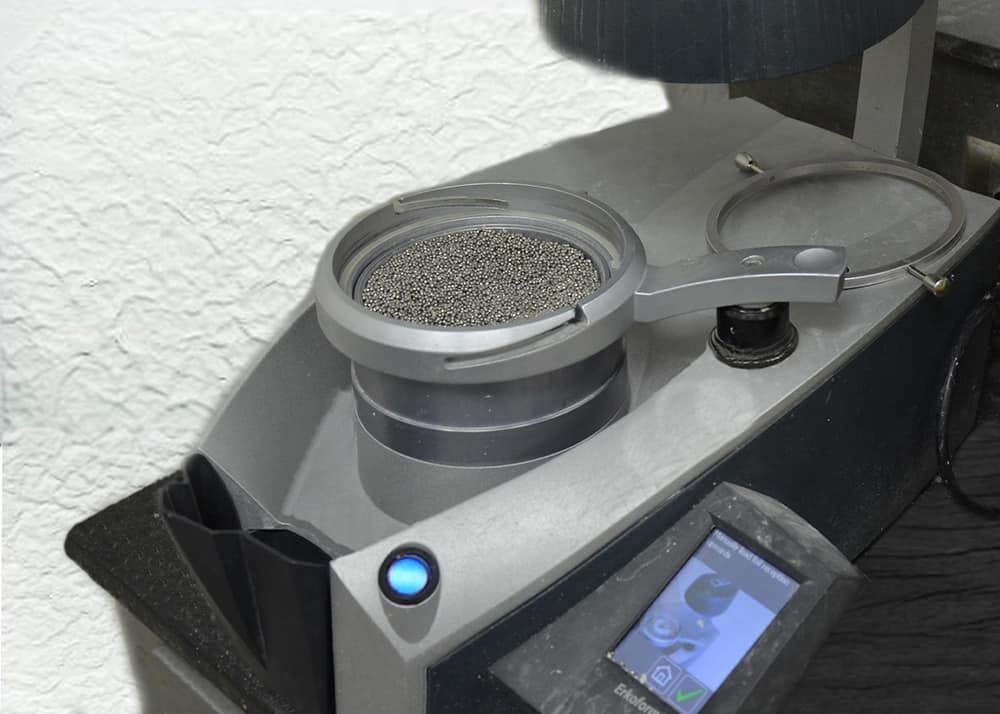
- The models are used to fabricate the aligners (see below image) for each phase of the plan.
The Blue Sky Plan software is easy to incorporate and utilize. However, many clinicians prefer to use Burbank Dental Lab in the orthodontic process.

Allowing Burbank Dental Lab to provide our expertise in the planning process frees up valuable clinician time. This option allows us to send the case either traditionally or virtually to be planned and designed totally by Burbank Dental Lab.
Patient Compliance

The success of any OTM treatment depends on patient compliance.
While clear aligners are not indicated for every patient, they offer an excellent option for those cases that will benefit from their use. Patients are more likely to accept and comply to clear aligners as they are close to invisible and can be removed.
One of the issues with this type of treatment's success is that patients must wear the appliance for a specific amount of time to be effective. If the appliance is lost or forgotten, this can set back the timeline and treatment by weeks at a time.
It is essential that patients understand the importance of regimented use of their appliances and create the habit of using it for the amount of time prescribed.
Burbank Dental Lab is a full-service laboratory. We are heavily involved in researching new technologies that help clinicians provide optimal treatment options to their patients.
As patients continue to become more and more aware of dental treatment options, it is essential to offer comprehensive options that provide patients with their desired outcome.
Orthodontic tooth movement is a great way to achieve desired results both directly and as a part of more complex treatments. The orthodontic team at Burbank Dental Lab is available to help with case evaluation and treatment planning.


 Previous Post:

