





When restoring an edentulous patient with implant (based) prosthetics, there are four basic treatment options available:
1. Direct to implant attachments
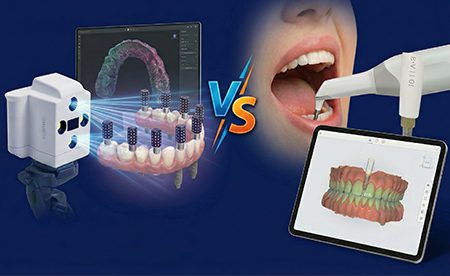
These are considered to be tissue-borne and implant-retained. The Locator and ERA are two of the more common attachments used. (Figure 1)
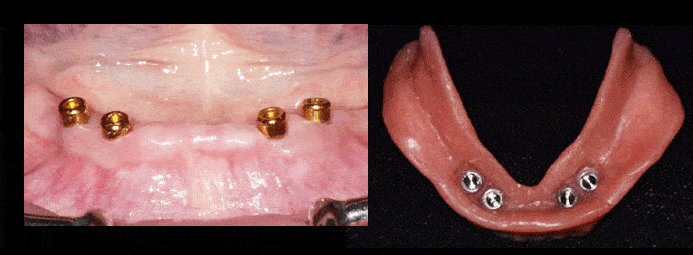
Figure 1
2. Denture over an implant-supported bar
The most common are locator bars and Hader bars. (Figure 2)
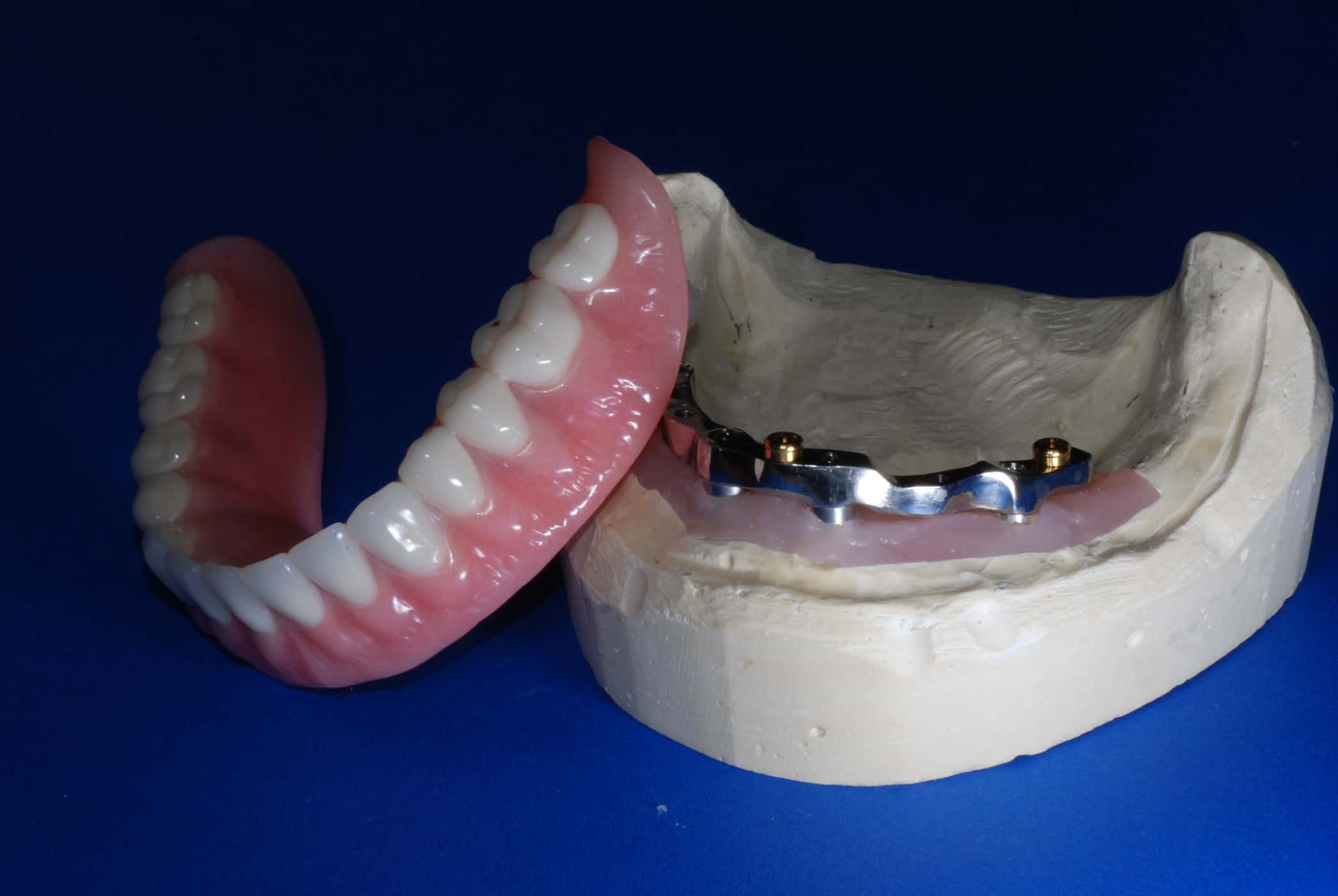
Figure 2
3. Screw-retained or cementable implant crown and bridge-type restorations
This category can be made as full arch prosthetics or in various segments, including single tooth restorations and bridges. This option is typically designed with tooth-colored restorations that abut directly onto the tissue and mimic natural tooth emergence from the tissue. This type of restoration requires the patient to have minimal bone loss and is best used when tissue retains maximum thickness and scalloping. This style of restoration is often used when teeth have been removed recently, and implants with accompanying healing abutments have been placed to retain papilla shape.
4. Hybrid Denture: a class all on its own
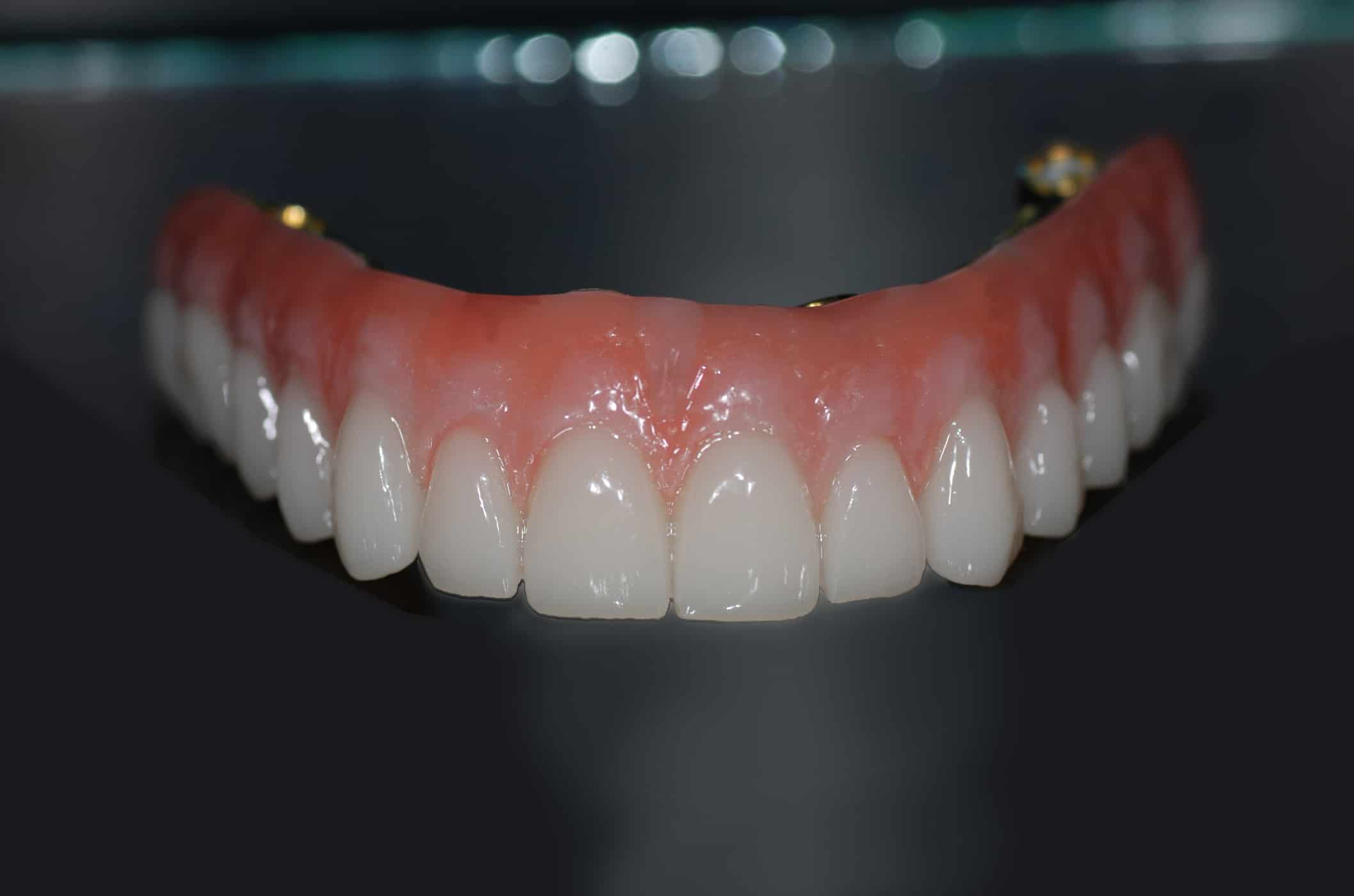
This category can employ several types of material to fabricate the prosthetic, but the end treatment is a screw-retained prosthetic that replaces both pink tissue and teeth for the whole arch.
Materials Available for Hybrid Prosthetics (but not limited to)
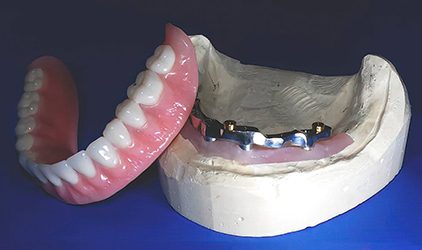
- Metal substructure with acrylic and denture teeth (Figure 3)
- Monolithic Zirconia with titanium base cylinders
- Porcelain fused to metal hybrid-style prosthetics
- Milled monolithic composite bonded to a metal substructure
This final category will be the focus of the remainder of the article, specifically an option that Burbank Dental Lab has found to be highly desirable. As one of the nation's leading dental implant laboratories, Burbank Dental Lab has responded to our clinicians' feedback, and we have developed our own solution for the dental implant hybrid category: the SmartComposite® Hybrid Prosthesis.
Burbank Dental Lab's SmartComposite® Hybrid Prosthesis is a unique approach within the fixed hybrid category of restorations. The development of SmartComposite was derived as a solution to meet the expressed needs of our clinicians and has been received very well by dentists in every type of practice.
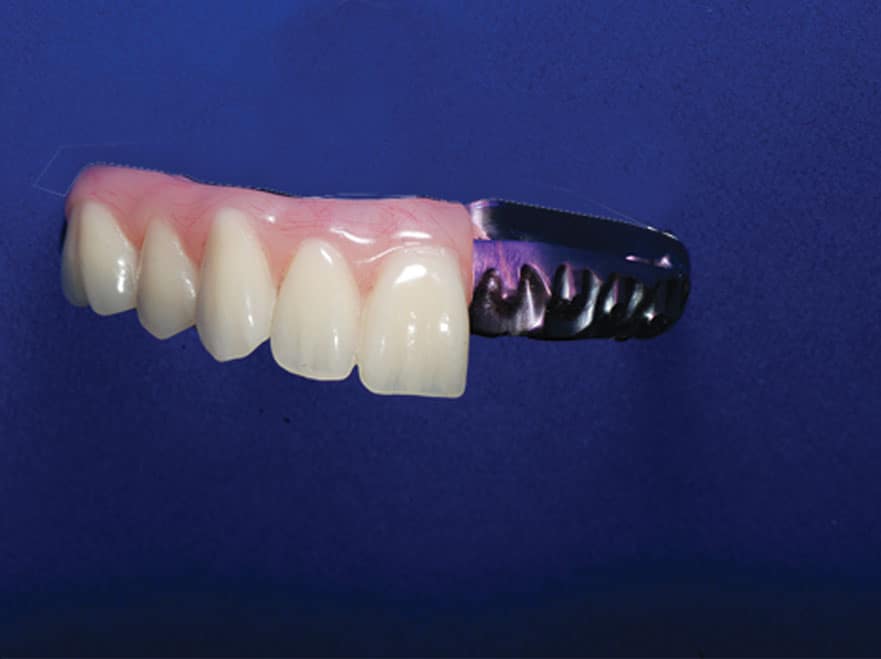
Figure 3


REQUEST YOUR FREE IMPLANT SUCCESS GUIDE BELOW
Success Guides
What is the SmartComposite Hybrid Prosthesis?
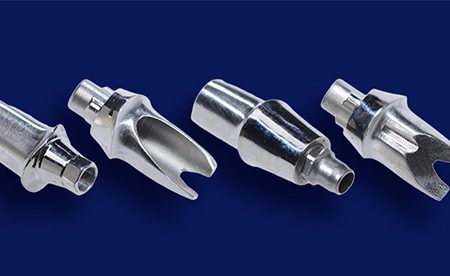
Burbank Dental Lab’s SmartComposite is a combination of milled (nickel and beryllium free) Cobalt-Chromium (Co/Cr) and Milled Monolithic Composite that is bonded together. The whole process starts with the denture set-up. After the set-up is confirmed and approved, our process begins with the fabrication of the milled Co/Cr substructure and a milled hybrid composite overlay. The milled Co/Cr substructure can be designed to go either straight to the implant/fixture or to a multi-unit abutment. (Figure 4)
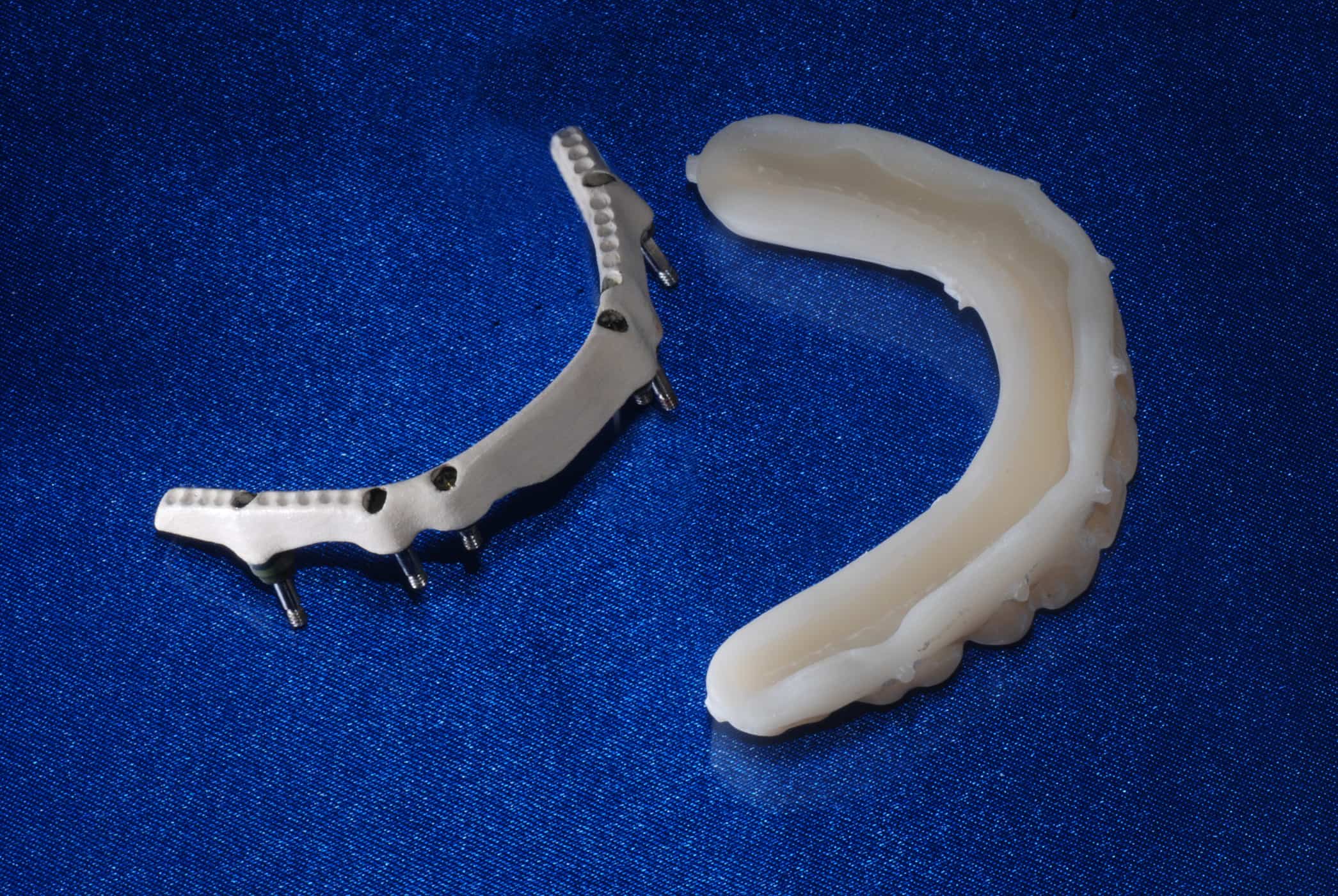
Figure 4
The Co/Cr frame is opaqued and etched, then the two components are bonded together. The final step in the creation of a SmartComposite® Hybrid is adding the pink tissue composite and polishing by hand. The result delivers a versatile prosthesis that benefits the clinician and patient. (Figure 5)
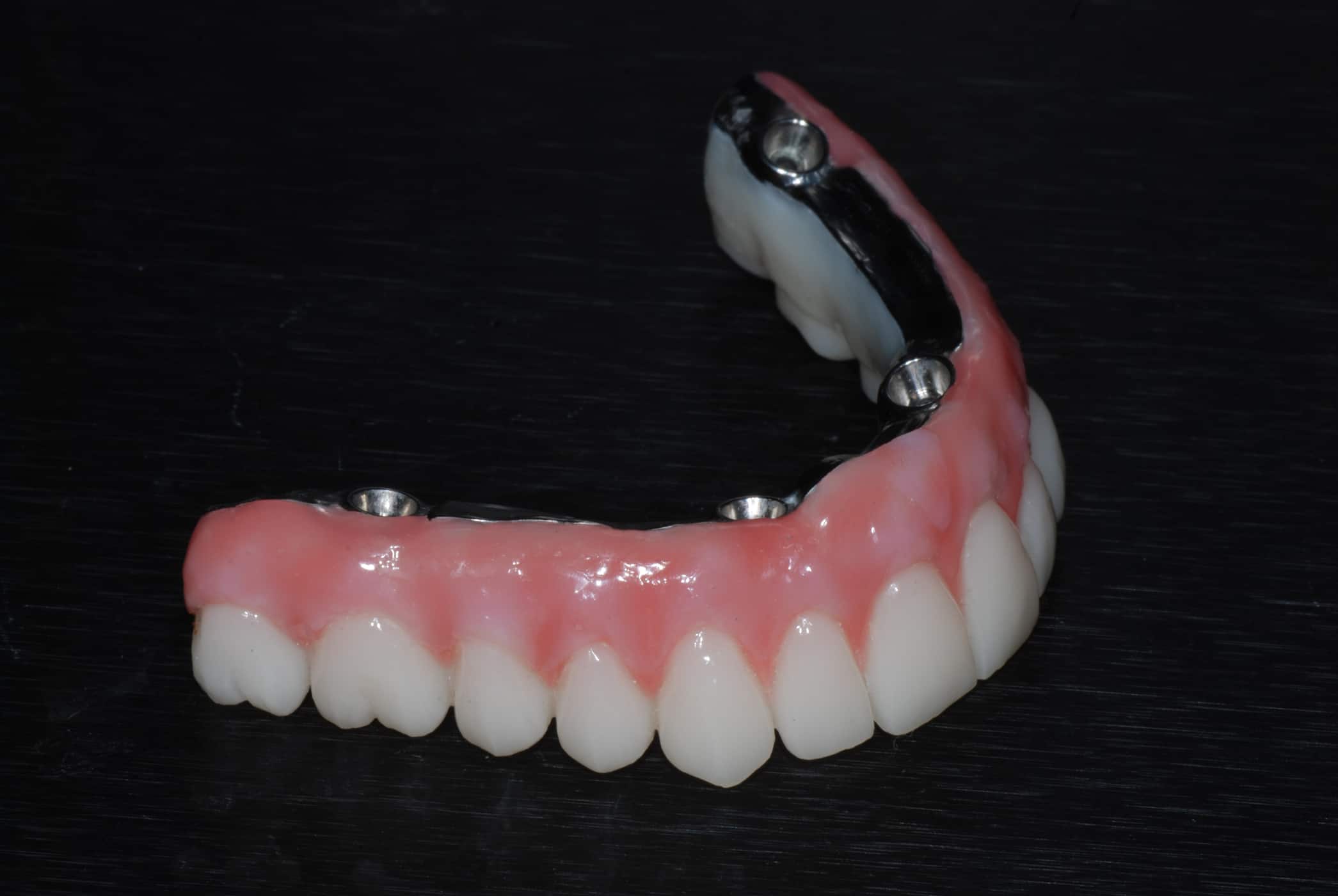
Figure 5
What are the features and benefits of SmartComposite®?
- Over 480 MPa compressive strength creates exceptionally durable restoration.
- Strong, rigid metal bonded to resilient hybrid composite adds to strength and durability.
- Monolithic composite will not dislodge like denture teeth.
- Easily polished intraorally.
- Lightweight.
- Composite can be used to repair the prosthetic intraorally.
- Cost effective compared to other categories of hybrid options.
- Highly esthetic.
- Dense composite resists absorption of fluids, and odors.
- Resilient nature of composite reduces stress to implant integration.
- Kind to opposing teeth; wears at about the same rate as natural teeth.
Indications:
- The best application is in large-segment and full-arch fixed prostheses.
- The inter-occlusal distance from the implant platform to opposing occlusion must be at least 13mm.
- The buccal-lingual width must be at least 9mm.
- It is essential that there be a minimum of 3mm of buccal and lingual thickness from the screw access channel.
This restoration is an ideal solution especially when a patient’s treatment plan is to receive two screw-retained prosthetics. Often the treatment of choice in this kind of a case is monolithic zirconia on the maxillary and the SmartComposite Hybrid on the mandibular. The stress-absorbing characteristic of the SmartComposite Hybrid opposing the zirconia can build desirable stress relief into the system.
With over six years of experience fabricating and delivering SmartComposite Hybrids, Burbank Dental Lab has received very favorable feedback on these prosthetics. The SmartComposite is a restoration that should be added to your consideration for many of your implant-supported edentulous cases.


 Previous Post:

