



Case Study: Case Fabrication
The case was then ready to be designed according to Dr. Estwani’s instructions.
One of the great benefits of a digital workflow is that the proposed case design can be shared with the clinician prior to pressing and finalizing the case. The presented case was digitally sent to Dr. Estwani for approval.
Once approval was given, the case was pressed in the BL2 shade as per the patient’s request.
As the esthetic demand from patients increases, satisfying these demands must be accomplished while still maintaining strong, long-lasting restorations. Today, with the help of technology, restorations such as E.max crowns can be fabricated with more predictability than ever before. E.max restorations are a proven option for cases where esthetics and strength are essential to overall patient satisfaction. E.max offers natural-looking restorations as well as many other benefits.
Burbank Dental Lab enjoyed working on the following case with Dr. Isam Estwani of New Horizons Dental Center in Herndon, Virginia.
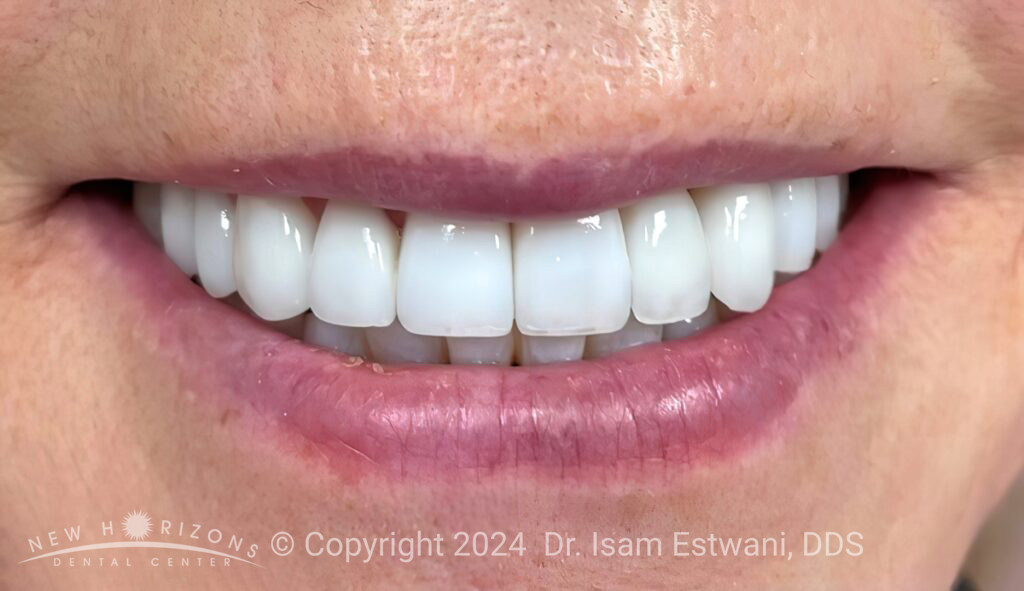
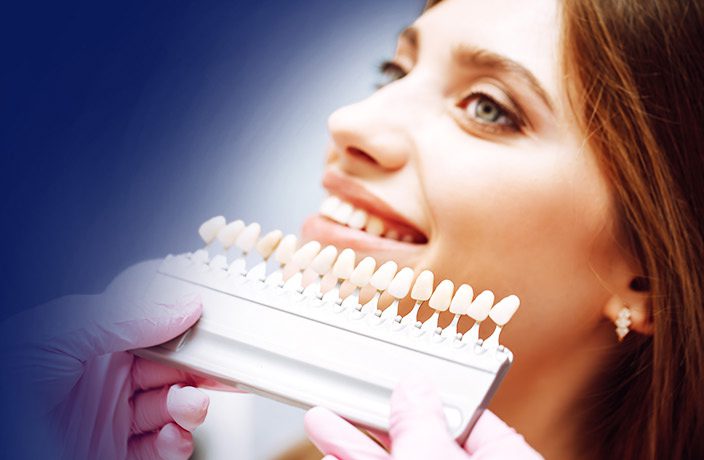
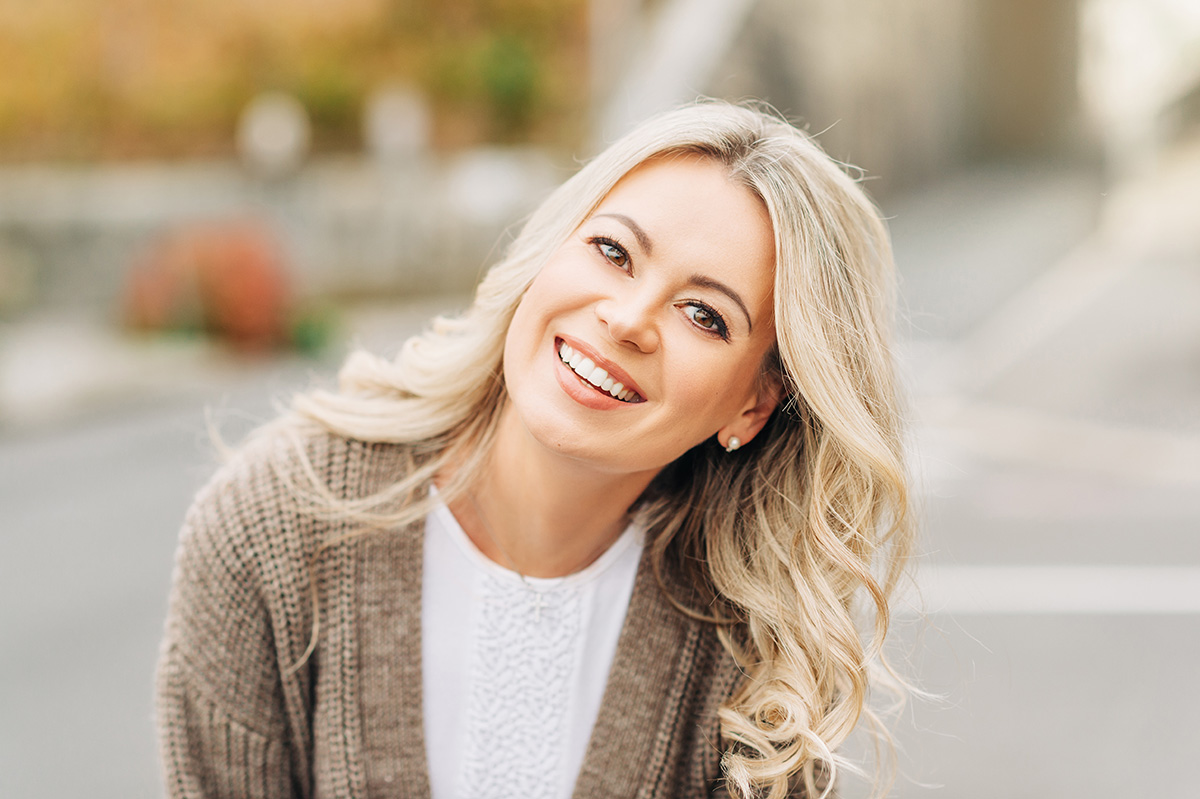
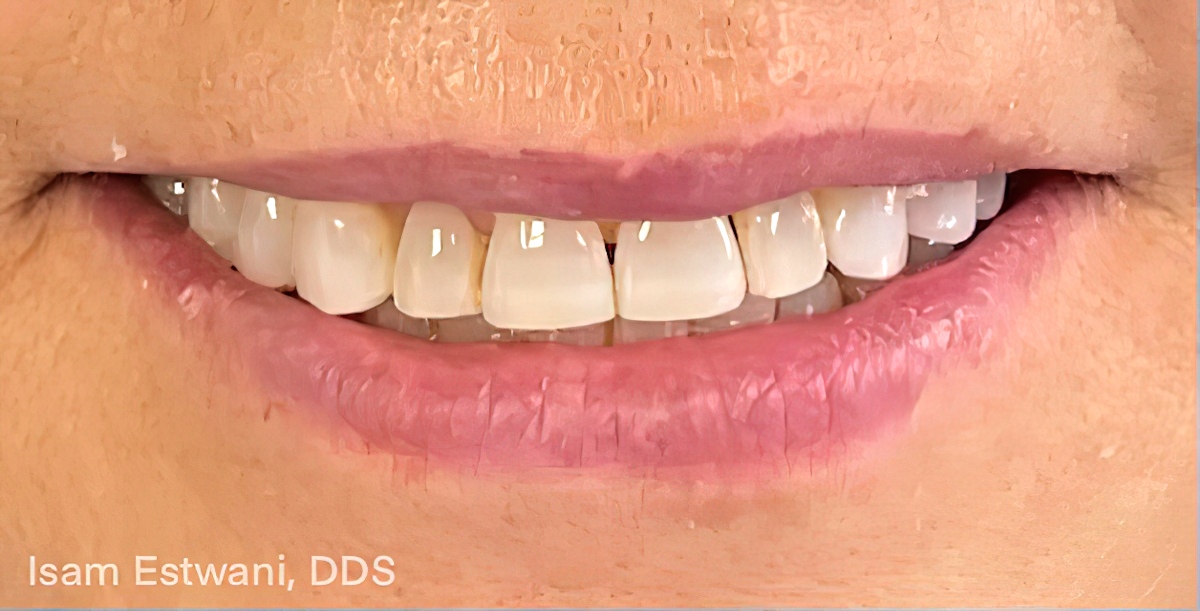
This patient wanted to improve her smile. She felt that her smile did not represent her personality. Her overall objective was that she wanted better symmetry and to whiten and brighten her smile. She also had gum recession and issues with black triangles. She also showed a can’t on her left side.
3 STEPS TO
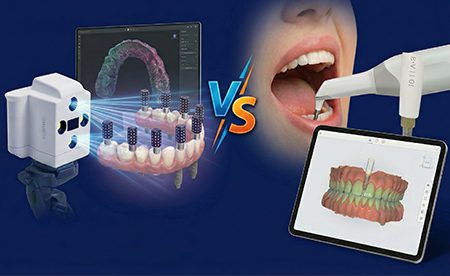
PHOTOGRAMMETRY SCANNING
WE HELP YOU GET IT RIGHT
EVERY TIME
STEP 1
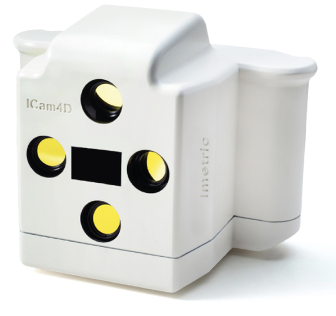
Burbank Dental Lab implant scan specialist provides the special scan bodies for insertion in the patient’s newly placed implant sites.
STEP 2
Scan Bodies are removed and special healing abutments are placed on the implant sites. Soft tissue can now be scanned with an intra-oral scanner.
STEP 3
The data from both scans are then sent to the dental lab. The ICam4d data and soft tissue scans are aligned to become a high-precision dental model.

Case Study – Continued
The patient wanted to improve her smile. As she saw it, her smile did not represent her personality. Her overall objective was to improve her symmetry and whiten and brighten her smile. Additionally, she had gum recession and black triangles. On her left side, she also showed a cant.
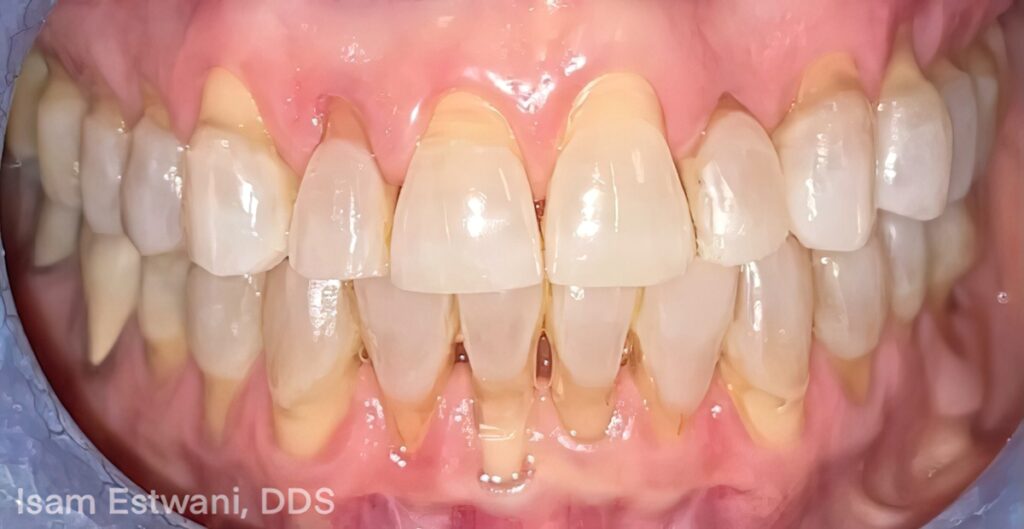
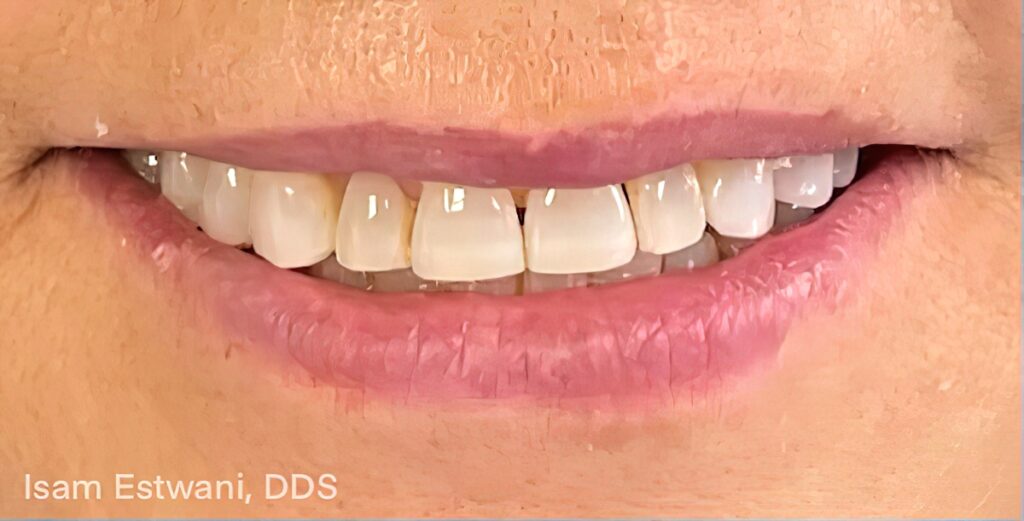
This case was completed by Dr. Estwani using a digital workflow. He began by scanning the patient’s current oral situation to use as a study model. This scan was used to help position the incisal edge of tooth #8 to help guide the rest of the case.
Patient study models provide vital information about a patient’s teeth and occlusion. Obtaining these scans is an essential part of planning cosmetic dentistry. Study models are realistic representations of teeth and other soft tissues surrounding them.
Case Study: Preparation
Next, Dr. Estwani prepared the teeth to receive layered E.max restorations on teeth 4 through 13.
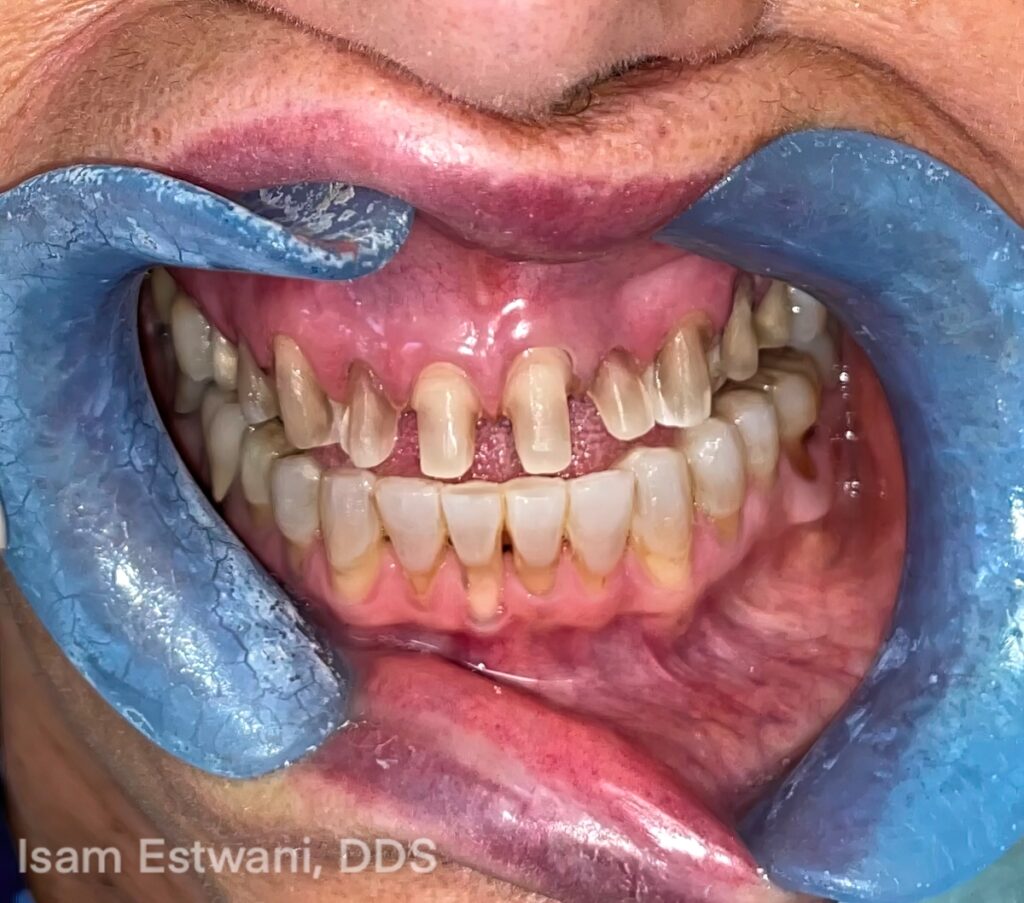
For best results, E.max crown preparations should include the following:
Case Study: Digital Scan
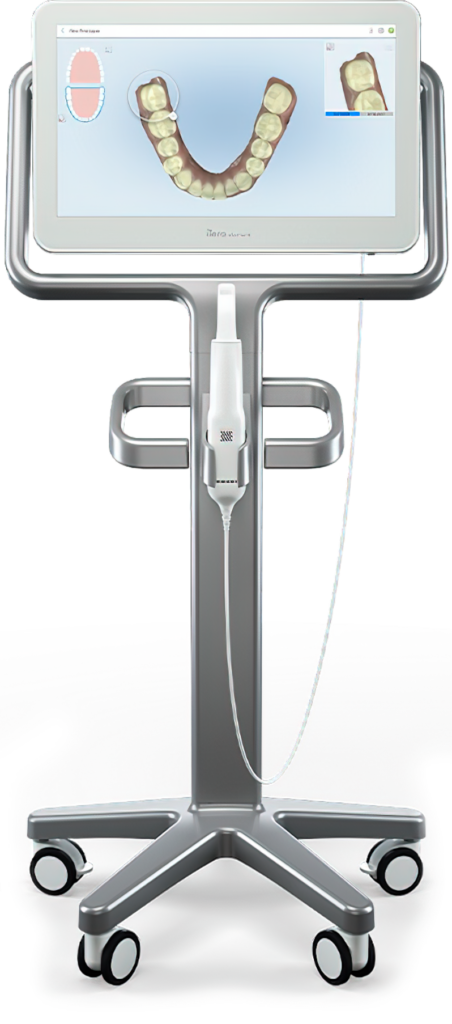
The case was digitally scanned using the iTero scanning system. The files were uploaded using the Burbank Dental Lab portal. The scans that were sent to the lab included the following:
Case Study: E.Max Cementation
Hydrofluoric acid must be used to etch glass-based ceramics in order to bond them. The ceramics should then be cleaned with phosphoric acid or ceramic cleaner, and a silane primer should be applied.
The clinician may be able to skip the cleaning step if the crown is fitted before the surface is roughened.
By applying ceramic primer before try-in, the clinician can eliminate the need for ceramic cleaners, simplifying the cleaning process.
After preparing the ceramic, a resin cement may be selected by the clinician.
Benefits of E.max
E.max is easily one of the most versatile and clinically successful dental systems. It has a flexural strength of approximately 440 Mpa, is highly esthetic, and has proven to be a long-lasting dental restoration.
E.max also has the following benefits:
Case Study: Insertion, Results, Before and After
The case was then sent to Dr. Estwani for insertion.
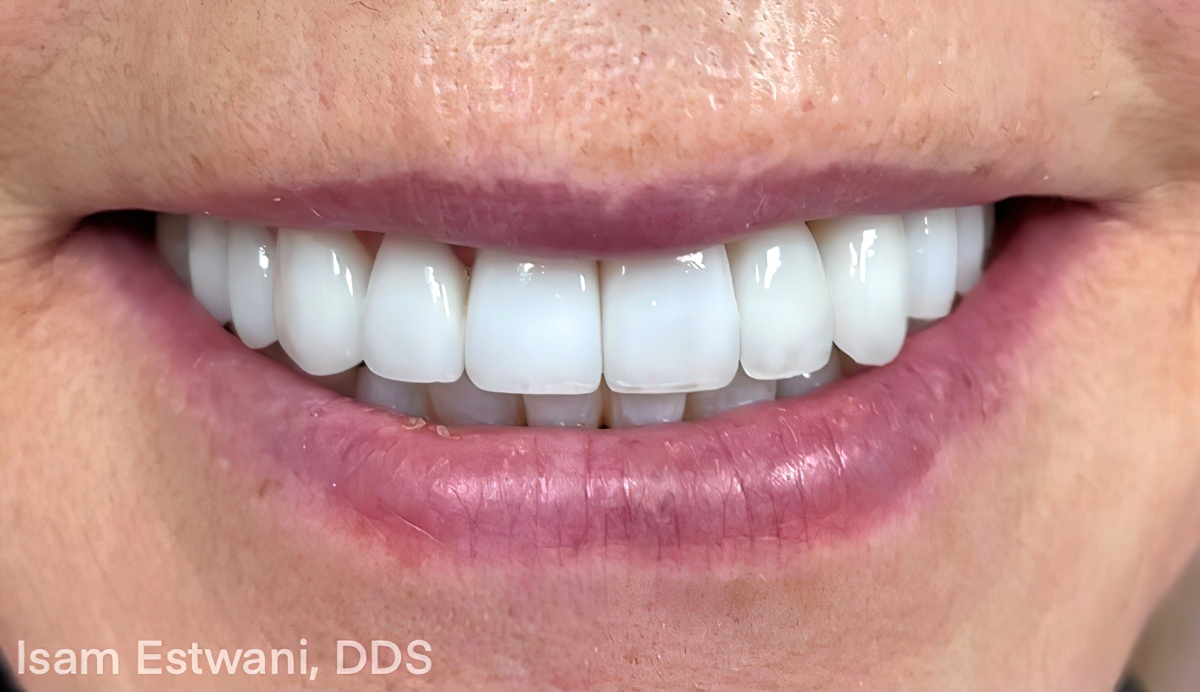
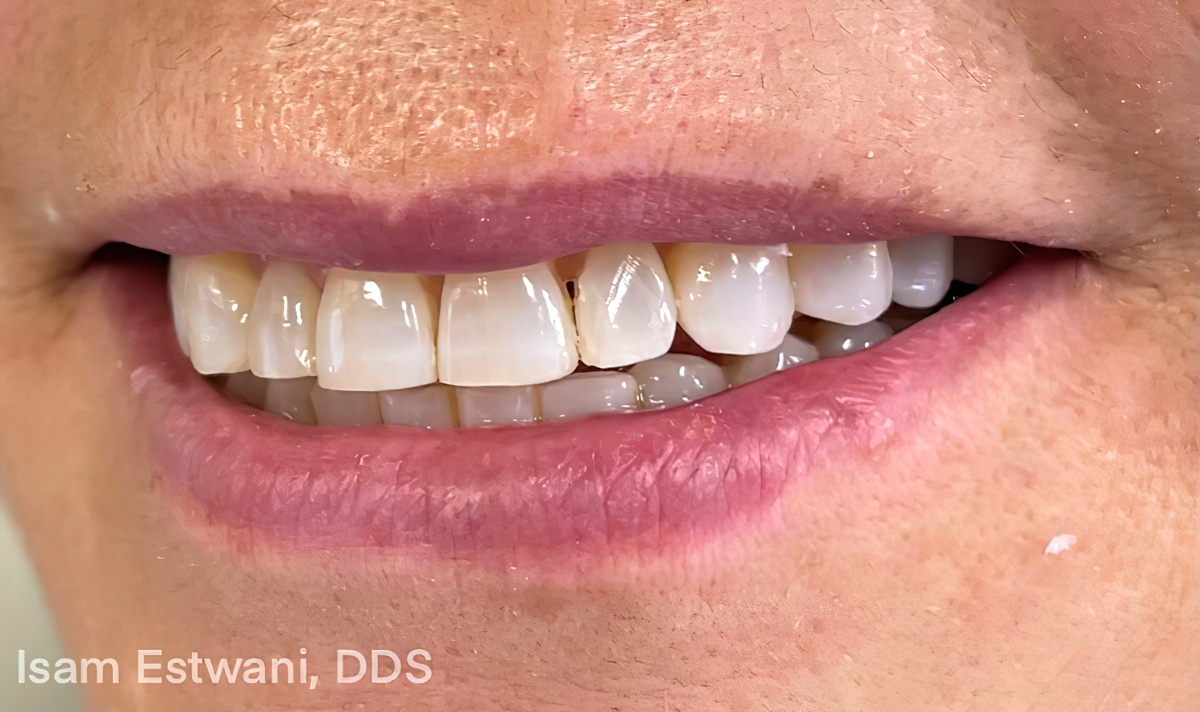
The final results addressed the patient’s desire to improve symmetry as well as brighten, whiten, and improve overall esthetics. The smile was no longer canted, and all spaces and black triangles were closed.
The patient was happy with this final result.

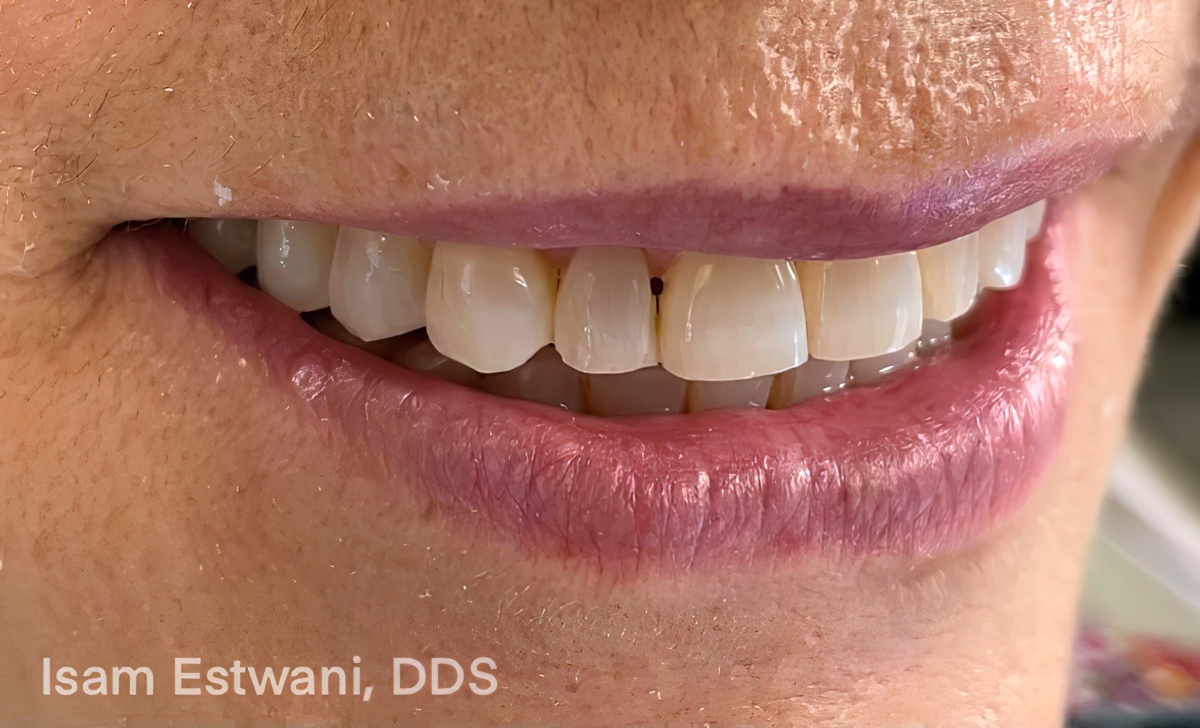
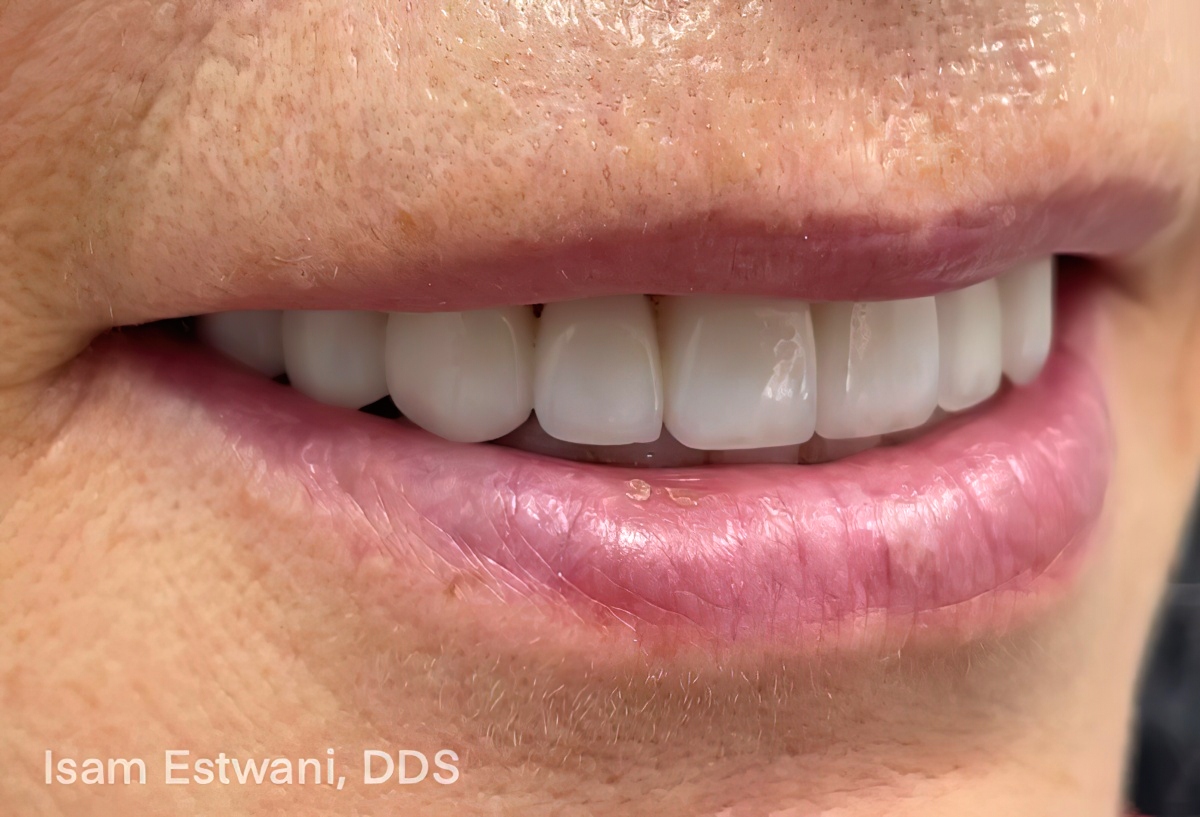
Thank you Dr. Isam Estwani


We want to thank Dr. Isam Estwani for choosing Burbank Dental Lab to work with on this case.




 Previous Post: